
how to prevent knee pain when cycling usually comes down to a few practical fixes: bike fit that matches your body, pedaling habits that don’t overload the joint, and training choices that respect recovery.
If you’re dealing with aching around the kneecap, a sharp twinge on the inside of the knee, or soreness that shows up the day after a ride, you’re not alone, but you also shouldn’t ignore it. Knee pain tends to get louder when you keep riding through it, especially if the root cause is mechanical.
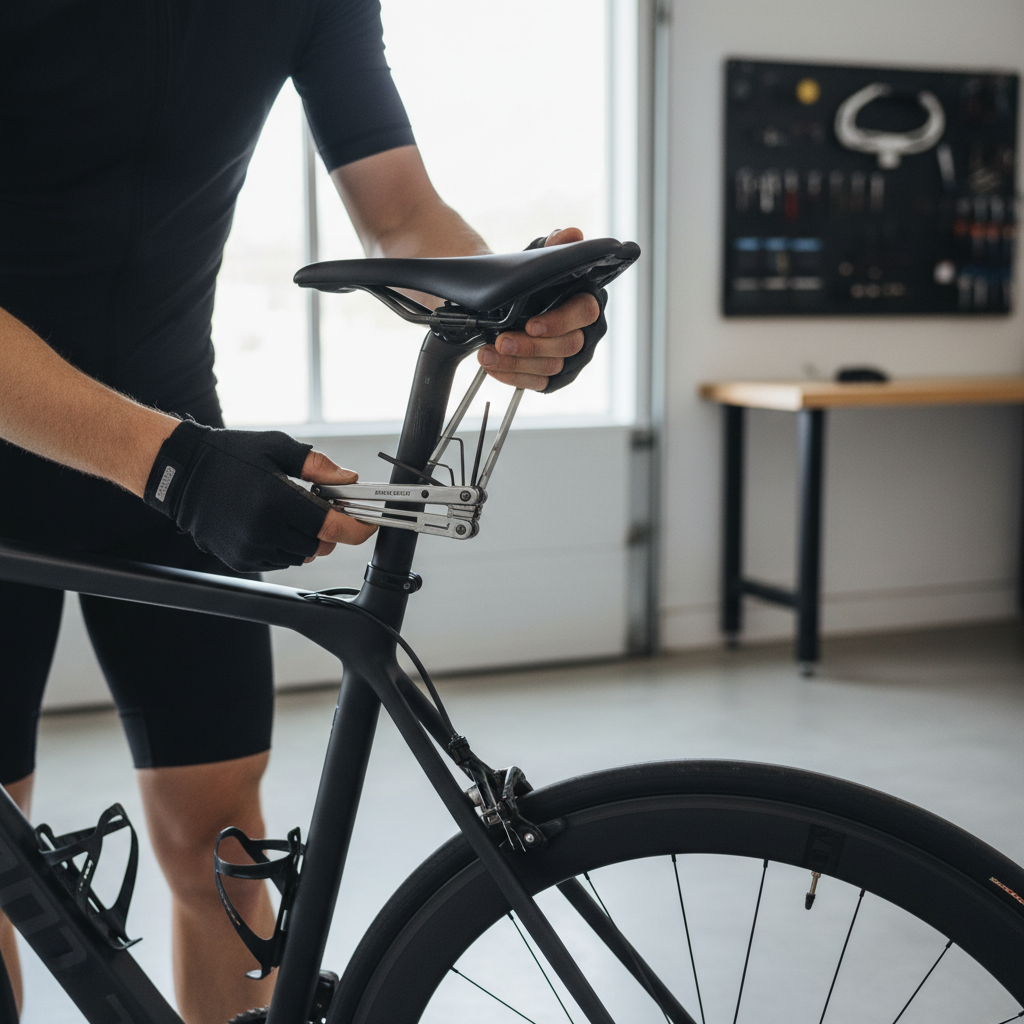
The good news is that many cases improve with straightforward adjustments, a calmer ramp in training, and a bit of strength work. This guide helps you identify what type of knee pain you might have, what to change first, and when it’s smarter to get a professional set of eyes on it.
What knee pain while cycling often means (and why it happens)
Cycling is low impact, but your knee still repeats the same motion thousands of times per ride. Small issues add up fast, especially when your position forces the knee to track awkwardly or your training load jumps.
- Front of knee (around/behind kneecap): often linked to saddle too low, high resistance grinding, or too much intensity too soon. Many riders describe this as “pressure” when pushing.
- Inside of knee: commonly tied to cleat angle/stance width, or the knee collapsing inward under load.
- Outside of knee: can relate to IT band irritation, saddle height that’s off, or a stance that pushes the knee outward.
- Back of knee: sometimes shows up when saddle is too high or you’re reaching at the bottom of the pedal stroke.
According to the American Academy of Orthopaedic Surgeons (AAOS), overuse and training errors are common contributors to knee pain in active people, and early adjustments plus load management often matter as much as any single exercise.
Fast self-check: figure out whether it’s fit, technique, or training load
Before you buy new parts or stop riding entirely, use this quick check. You’re looking for the “most likely lever” to pull.
A. Fit clues
- Pain starts during the ride and ramps with time or hills
- One knee hurts more than the other on the same bike
- Changing shoes/pedals recently seemed to trigger it
- Discomfort improves noticeably when you raise/lower saddle a little
B. Technique clues
- You often ride at low cadence (slow pedal speed) and high force
- Knees “wobble” side to side when you fatigue
- You tend to mash big gears on climbs
C. Training load clues
- You increased weekly volume or intensity within 1–2 weeks
- You stacked hard days without recovery
- Pain is worse the next morning, even if the ride felt “fine”
Key point: if swelling, locking, instability, or a sudden sharp pain shows up, treat it as a red flag rather than a “fit project.”
Bike fit fixes that prevent most cycling knee pain
If your goal is how to prevent knee pain when cycling, bike fit is usually the highest return place to start, because it changes the knee’s tracking every single pedal stroke.
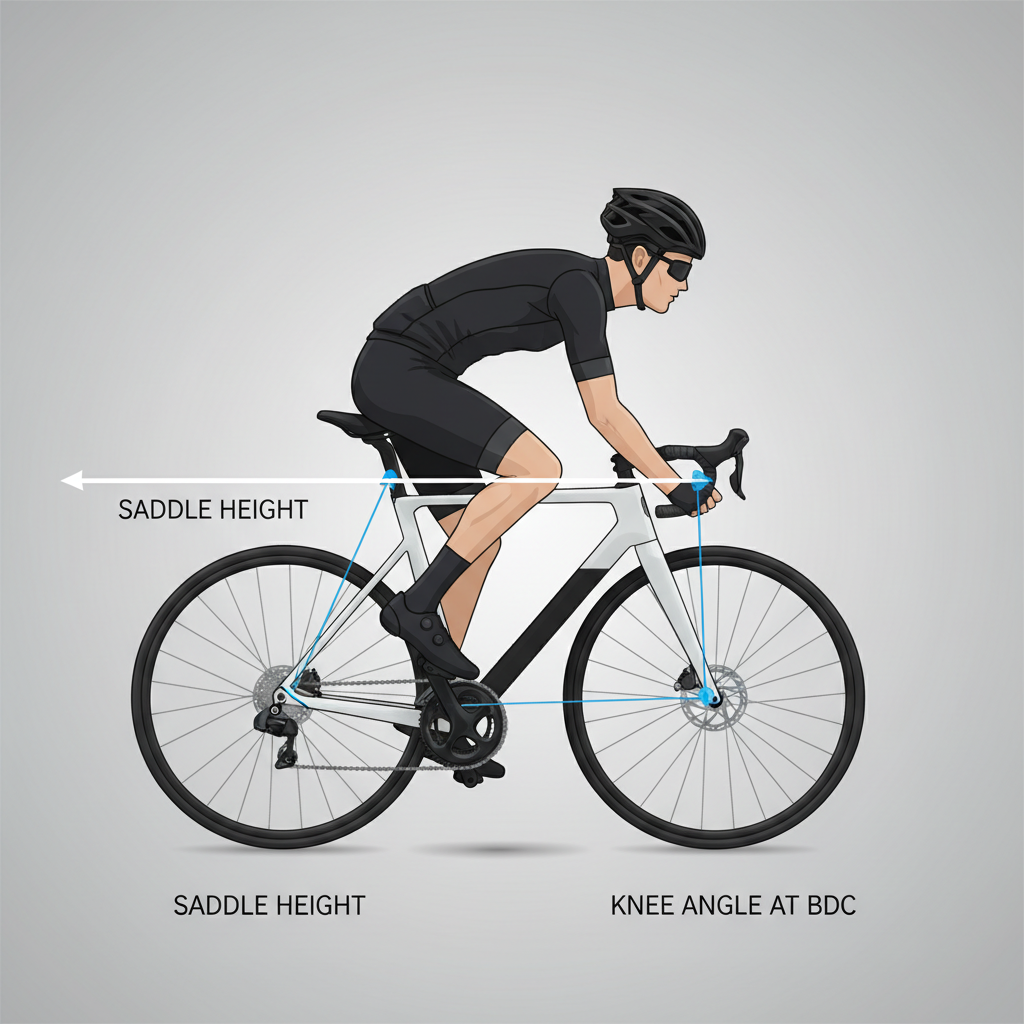
Saddle height (the usual suspect)
Too low often loads the front of the knee, too high can strain the back of the knee or cause hip rocking. A practical baseline many fitters use is a slight bend in the knee at the bottom of the stroke, without your hips swaying.
- If pain is in the front of the knee, consider raising the saddle in small steps (think a few millimeters at a time).
- If pain is in the back of the knee, consider lowering the saddle slightly.
Make one change, ride 20–40 minutes easy, then reassess. Big jumps make it hard to tell what helped.
Saddle fore-aft and tilt
Fore-aft affects where the knee sits over the pedal during the power phase. Too far forward can increase kneecap stress, too far back can make you overreach and tug. Tilt matters too: a nose-up saddle can change hip position and knee tracking indirectly.
- If you feel you’re constantly pushing yourself backward, check for a nose-up tilt.
- If you feel jammed at the top of the pedal stroke, fore-aft may be too far forward (or saddle too low).
Cleats, foot angle, and stance width
Cleat setup is sneaky because you may feel fine for a week, then the knee starts complaining. Many riders do best when the foot can “float” naturally rather than being forced straight.
- Start neutral: align cleats so your feet sit as they naturally point when walking.
- Don’t force symmetry: one foot may toe out more than the other.
- Check stance width: if knees rub the top tube or flare wide, you may need a different cleat position, pedal spacers, or shoe choice.
According to the American Physical Therapy Association (APTA), movement quality and alignment can influence joint stress over time, which is why a small change at the foot can matter at the knee.
Pedaling habits: reduce joint stress without riding “soft”
You don’t need to baby the pedal stroke, but you do want to avoid turning every ride into heavy leg presses.
Use a knee-friendlier cadence
A moderate-to-higher cadence typically reduces peak force per stroke. Many recreational riders feel better somewhere around 80–95 rpm on flats, but your sweet spot depends on fitness and terrain.
- On climbs, shift earlier than you think you need.
- If your breathing is fine but your knees feel loaded, cadence is often too low.
Stay seated on steep climbs (sometimes)
Standing can spike force through the knee, especially if you rock the bike and let the knee drift. It’s not “bad,” but if you’re trying to calm pain, use standing sparingly until symptoms settle.
Watch knee tracking when fatigue hits
If your knees dive inward at the top of the stroke, that’s a common pattern when hips and glutes fatigue. It’s also a clue that strength work will help.
Training adjustments that keep pain from coming back
Even with perfect fit, a rapid jump in volume or intensity can recreate the same issue. This is where many people get stuck: the bike feels great, the plan is exciting, then the knee starts “negotiating.”
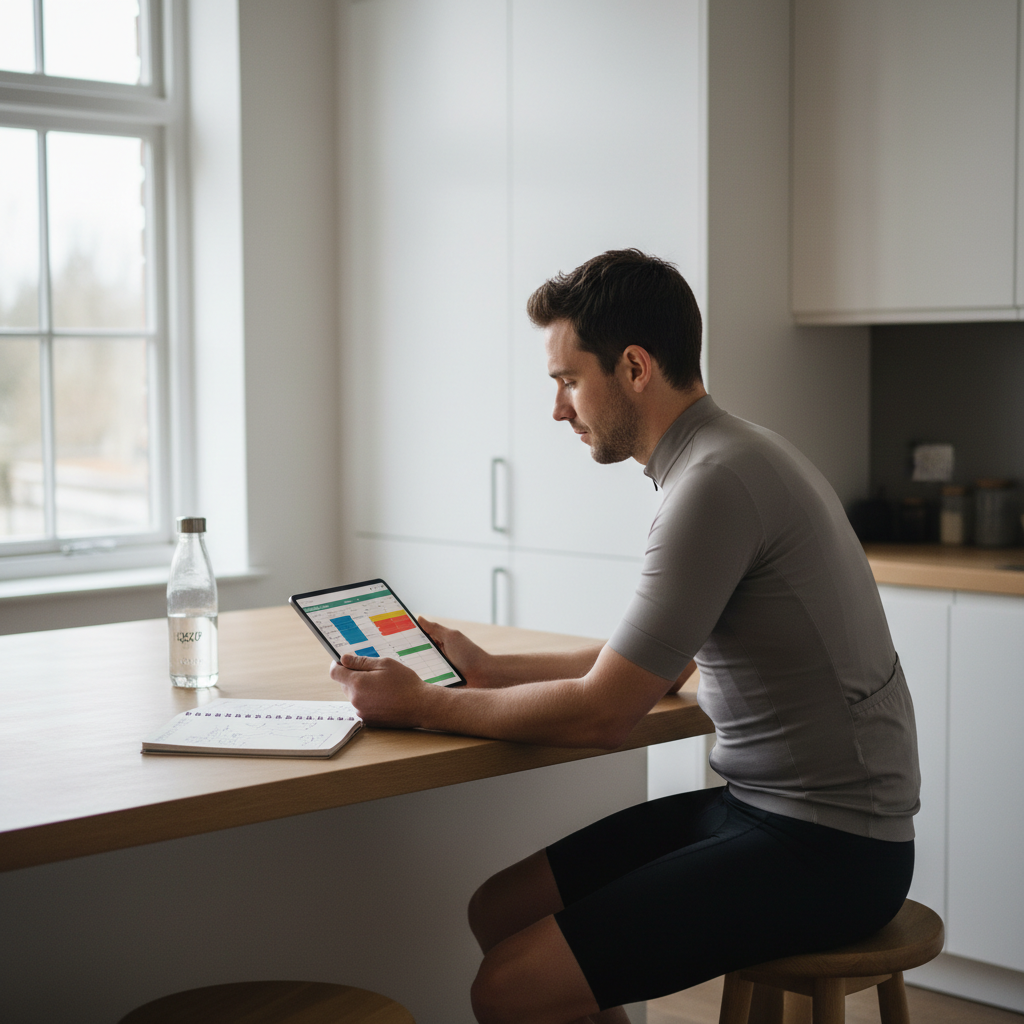
A simple “pain-aware” rule set
- During the ride: mild discomfort that stays stable may be okay, pain that ramps up is a signal to back off.
- After the ride: if pain is worse the next morning, reduce load for a few days.
- Week to week: increase either volume or intensity, not both, when you’re rebuilding.
Warm up like you mean it
Many knee complaints show up when riders jump straight into hard efforts. Give yourself 10–15 minutes easy, then build gradually, especially before intervals or hills.
Choose surfaces and sessions wisely
- High-torque efforts (big gear, low cadence) tend to aggravate sensitive knees.
- Spinning sessions and flatter routes often work better during a flare.
- Indoor trainers can increase repetitive load; small fit errors feel bigger indoors.
Strength and mobility: the “insurance policy” most riders skip
If you want how to prevent knee pain when cycling over the long run, a little off-bike work is usually worth it, especially for hips and quads control.
High-value strength moves (2–3x/week)
- Split squats: build single-leg control that looks a lot like pedaling demands.
- Step-downs: teach the knee to track without collapsing inward.
- Hip bridges or hip thrusts: bring glutes into the party so knees do less “extra.”
- Calf raises: support ankle stability, which can affect knee tracking.
Keep reps smooth, stop short of sharp pain, and scale range of motion if symptoms are active.
Mobility that tends to help (but don’t overdo it)
- Gentle quad and hip flexor stretches after rides
- Light foam rolling for quads and lateral thigh if it feels relieving
- Ankle mobility drills if heels drop excessively or feel stiff
According to the Centers for Disease Control and Prevention (CDC), strengthening activities are part of overall physical activity recommendations for adults, and cyclists often benefit because riding alone does not load tissues in varied directions.
Troubleshooting table: symptom → likely cause → first fix
This is not a diagnosis, it’s a starting point to help you test changes logically.
| Where it hurts | Common contributors | What to try first |
|---|---|---|
| Front of knee | Saddle too low, grinding big gears, sudden intensity increase | Raise saddle slightly, spin easier gears, reduce intensity 1–2 weeks |
| Back of knee | Saddle too high, overreaching at bottom of stroke | Lower saddle slightly, check cleat position, keep cadence steady |
| Inside of knee | Cleat angle forcing rotation, stance too narrow, knee collapsing inward | Adjust cleat angle to natural foot position, add glute strength work |
| Outside of knee | IT band irritation, stance too wide/narrow, saddle height off | Small fit check, reduce high-torque climbs, add hip stability work |
Common mistakes that keep knee pain going
- Changing five things at once: you lose the signal. One adjustment per test ride is slower, but it works.
- Chasing “perfect angles” from the internet: ranges exist, bodies vary, and comfort under load matters.
- Ignoring shoe wear: worn cleats or uneven insoles can quietly change tracking.
- Only resting: rest can calm symptoms, but if fit or technique caused it, pain often returns.
- Training through sharp pain: discomfort is one thing, sharp or worsening pain is a different category.
When to see a bike fitter, physical therapist, or doctor
Many riders can self-correct mild issues, but some situations deserve professional help, especially because knee pain can come from multiple structures.
- Swelling, warmth, redness, or fever
- Knee gives way, locks, or feels unstable
- Pain persists beyond 2–3 weeks despite reducing load and making basic fit changes
- A clear injury event, like a crash or sudden pop
A reputable bike fitter can help you dial position without guesswork, and a physical therapist can assess strength, mobility, and movement patterns. If you’re unsure what you’re dealing with, a clinician can rule out issues that should not be pushed through.
Practical 7-day reset plan (easy to follow, not dramatic)
If your knee feels irritated right now, try this calmer week to break the cycle while keeping some momentum.
- Day 1–2: easy spins only, flat route or low resistance, stop if pain increases.
- Day 3: one fit tweak only (usually saddle height), short easy ride to test.
- Day 4: off-bike strength session, light and controlled.
- Day 5: easy ride with higher cadence focus, avoid climbs.
- Day 6: rest or short walk, gentle mobility.
- Day 7: longer easy ride if symptoms stayed stable, keep intensity low.
Key takeaways: fix obvious fit errors, spin rather than mash, rebuild load patiently, and add basic strength so the knee doesn’t do all the work.
Closing thoughts: keep riding, just make it make sense
how to prevent knee pain when cycling is rarely a mystery, it’s usually a few small choices repeating over time. Start with the highest-impact basics, saddle height and cleat comfort, then clean up cadence and training load so the joint can settle.
If you want one action today, film a short side-view clip of your pedaling on a trainer or safe flat road, then make a single fit change and retest. If symptoms keep escalating or you notice red flags, getting help from a fitter or clinician tends to save time and frustration.
FAQ
- How do I prevent knee pain when cycling on hills?
Shift earlier, keep cadence up, and limit low-cadence grinding while you build strength. If hills reliably trigger pain, double-check saddle height and cleat setup before adding more climbing volume. - Is knee pain from cycling usually a bike fit problem?
Often, yes, but not always. Fit, technique, and training load interact, and a small fit issue becomes obvious when volume increases or fatigue changes your tracking. - Should I lower my saddle if my knees hurt?
Sometimes lowering helps, especially for pain behind the knee, but front-of-knee pain more commonly relates to a saddle that’s too low. Make very small changes and test with an easy ride. - Can cleat position really cause knee pain?
It can, because the foot controls rotation and stance width. If you recently changed shoes, cleats, or pedals, that timing alone is a strong clue to investigate. - What cadence helps reduce knee stress?
Many riders feel better at a moderate-to-higher cadence, because it reduces peak force per pedal stroke. The “best” number varies, so aim for smooth spinning rather than a specific RPM target. - Do knee sleeves help when cycling?
They may provide warmth and a sense of support, which some riders like, but they usually don’t fix the underlying cause. Use them as comfort, not as the main strategy. - When should I stop riding and see a professional?
If you have swelling, instability, locking, or pain that worsens despite reducing load and adjusting basics, it’s reasonable to consult a physical therapist or doctor to rule out problems that need specific care.
If you’re trying to get back to pain-free rides and you’d rather not guess, a session with a qualified bike fitter or a physical therapist who understands cycling can help you connect the dots faster, especially when symptoms keep returning after “small tweaks.”