
Fitness equipment guide is the fastest way to stop guessing and start buying home gym gear that actually fits your space, your goals, and your tolerance for maintenance and noise.
If you have ever bought something that looked great online but now lives in a closet, you already know the real problem is not motivation, it is mismatched equipment. A treadmill can be perfect for one household and a weekly argument for another.
This guide focuses on practical selection: what to buy first, what to skip, how to compare cardio vs strength, and how to spot “looks premium” features that do not matter in daily use.
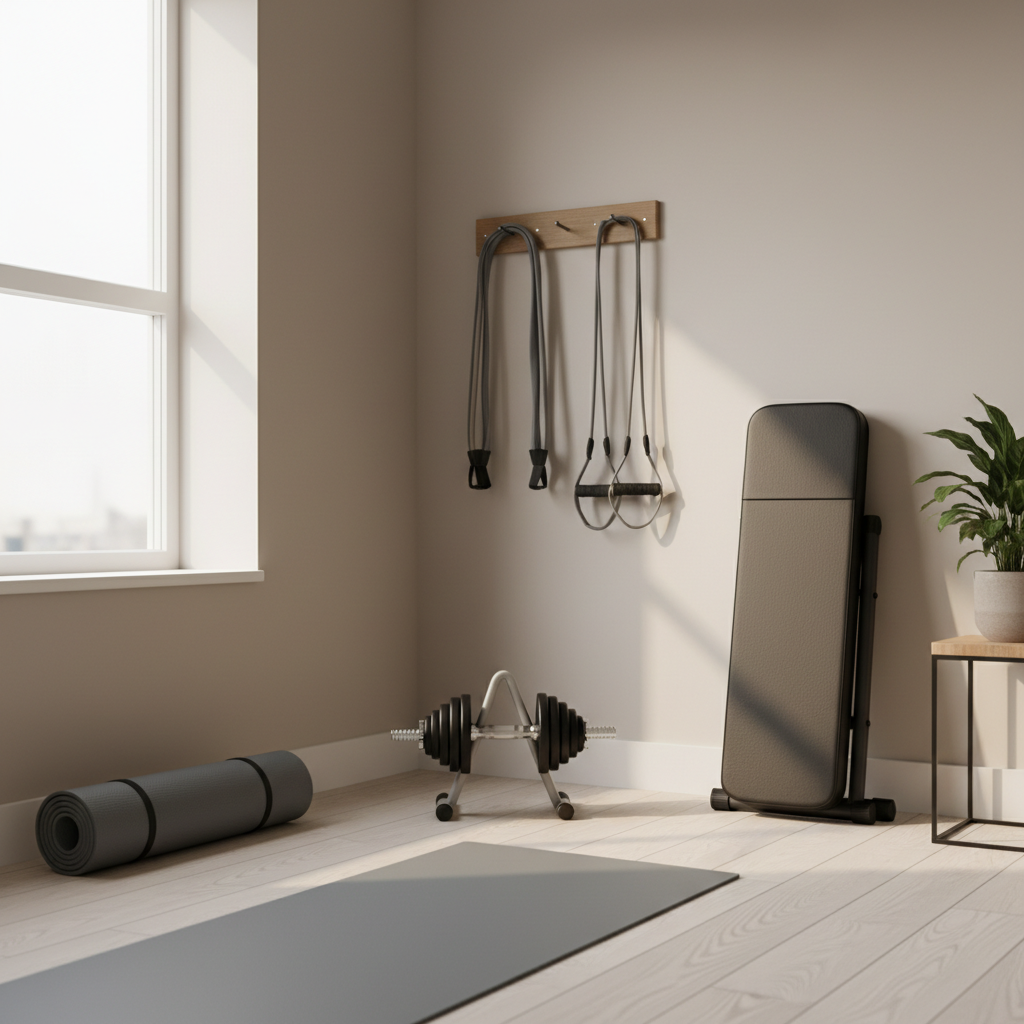
Start with your “non-negotiables”: goals, space, and schedule
The best home setup usually comes from a few constraints you cannot argue with. Get those clear and most choices become obvious.
Define the goal in one sentence
Pick a primary goal for the next 8–12 weeks. Not forever, just the next block. Examples: “I want to walk 30 minutes, 4 days a week,” or “I want to get stronger for back pain management,” or “I want short, sweaty interval workouts.”
- Fat loss and general health: consistency beats intensity, so comfort and convenience matter most.
- Strength and body composition: progressive overload matters, so adjustable resistance and stable movement patterns matter.
- Joint-friendly cardio: lower-impact options like rowing, cycling, and elliptical often feel better than running.
Measure space like you mean it
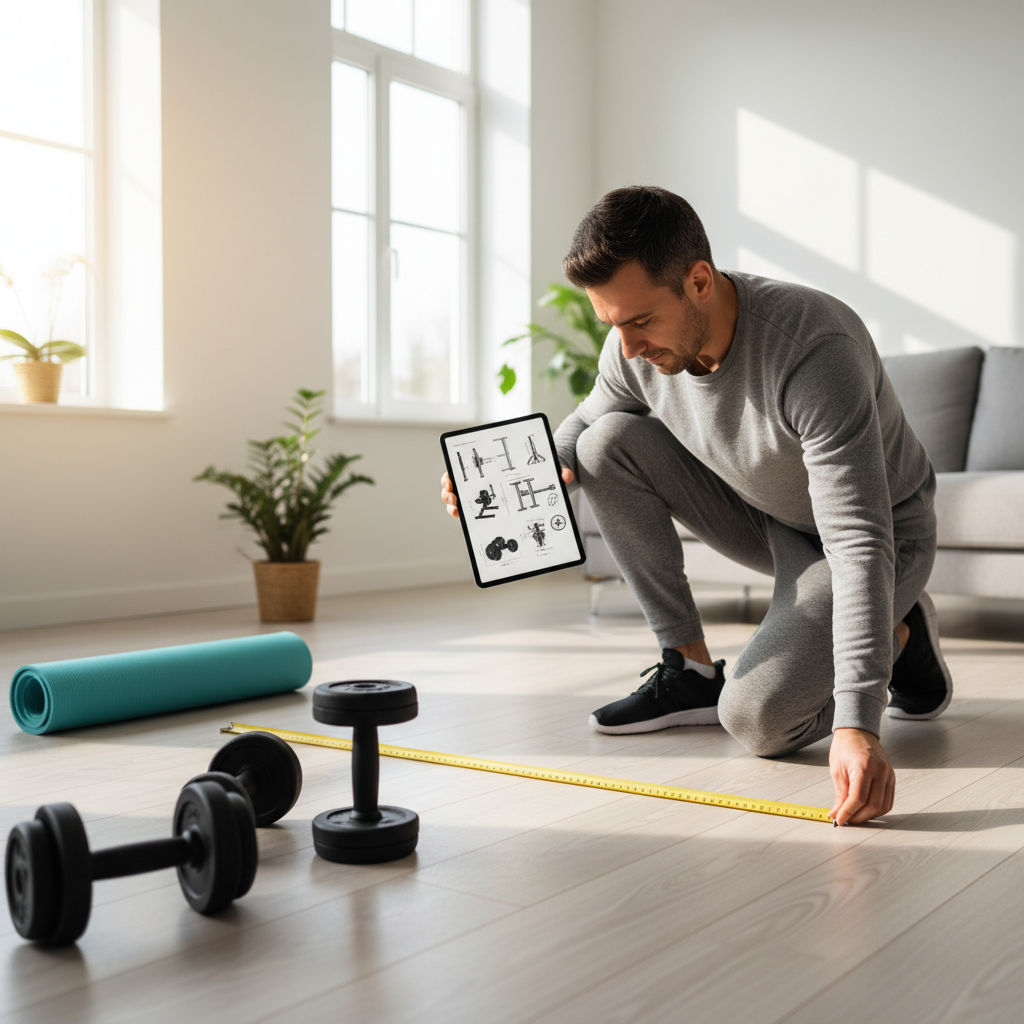
Don’t eyeball it. Measure the footprint, ceiling height, and clearance. Many households forget the “use space,” not just the “storage space.” You need room to step on and off, hinge, press overhead, and move safely.
- Flooring: hard floors may need a mat for noise and stability.
- Doorways and stairs: large equipment returns get painful fast.
- Noise and vibration: downstairs neighbors, kids sleeping, and thin walls change the right pick.
Be honest about time and friction
If you only have 20 minutes, a machine that takes 5 minutes to set up becomes a dealbreaker. Many people do better with “always-ready” tools like a mat, bands, and adjustable dumbbells.
Cardio equipment: pick the one you will actually use
Cardio is where people overspend. You can get great results with simpler choices if they match your body and routine.
According to the American Heart Association, adults typically benefit from regular physical activity for heart health, and a mix of intensity levels can help adherence. That does not mean you need the biggest machine, it means you need a repeatable habit.
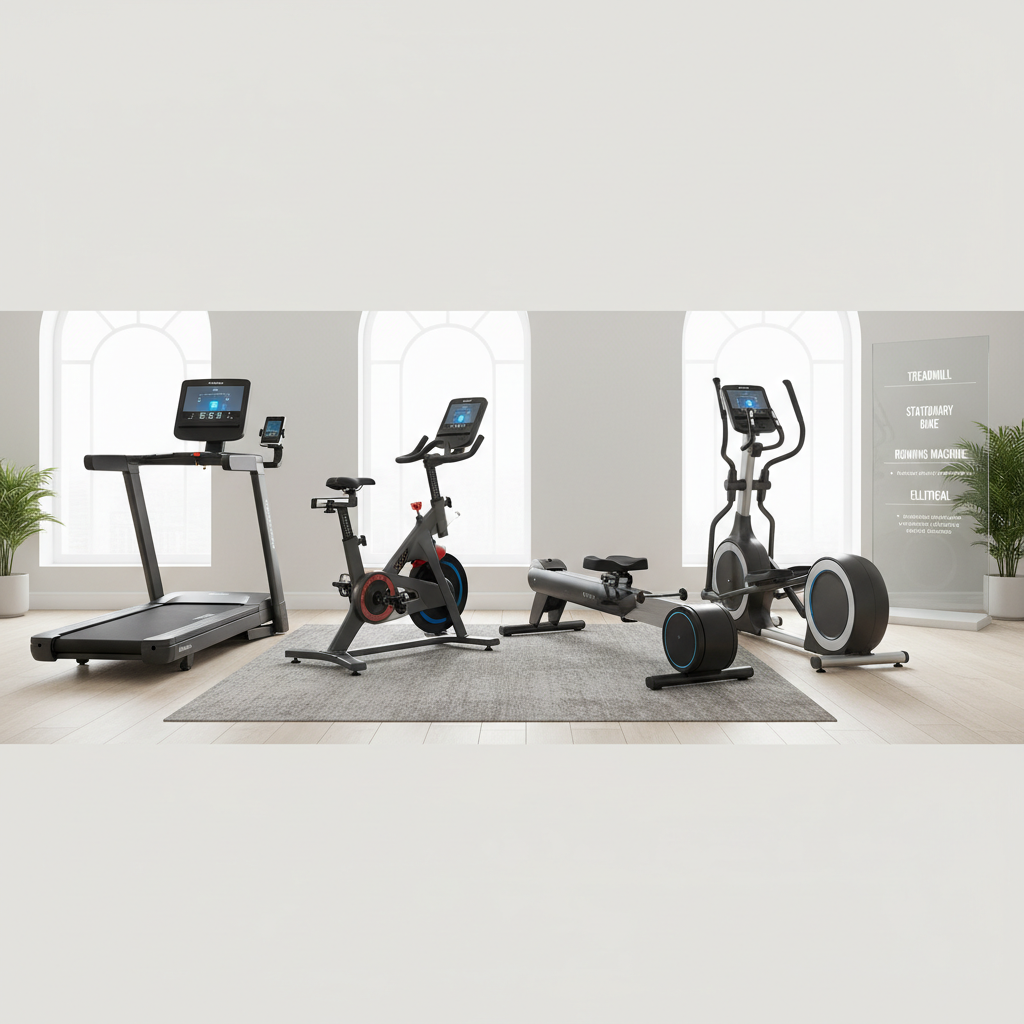
Treadmill
- Good for: walkers and runners who value simple “get on and go.”
- Watch for: motor power, deck cushioning, and noise. In many homes, noise becomes the real limiter.
- Common mismatch: people who hate running, then feel guilty staring at it.
Stationary bike (upright or recumbent)
- Good for: low-impact cardio, multitasking (shows, emails after work), steady-state sessions.
- Watch for: seat comfort, adjustability, and resistance range.
- Common mismatch: poor fit leads to knee or hip irritation, a proper setup matters.
Rowing machine
- Good for: full-body conditioning, intervals, people who get bored easily.
- Watch for: technique learning curve and storage length.
- Common mismatch: “looks efficient” but ends up unused because form feels awkward.
Elliptical
- Good for: joint-friendly cardio with a familiar rhythm.
- Watch for: stride length and stability. Cheaper models can wobble.
- Common mismatch: bulky footprint in a tight room.
Strength equipment: build a setup that can progress
Strength training at home works best when you can make exercises gradually harder. That means load options, stable positions, and a few core movement patterns.
According to the American College of Sports Medicine, resistance training is commonly recommended as part of a balanced fitness program, and progression over time is a key principle. In plain English, you want gear that grows with you.
Home strength “starter kit” that fits most people
- Adjustable dumbbells or a small dumbbell set
- Resistance bands (loop and long bands)
- Sturdy bench (optional, but very useful)
- Pull-up bar (doorframe models vary, check safety limits)
- Floor mat for comfort and traction
When to consider a barbell, rack, or cable system
If your goal is serious strength, a barbell and rack can be worth it. But it is a commitment: space, floor protection, and safe lifting practices become non-negotiable.
- Power rack/squat stand: great for squats, bench, overhead press, pull-ups, safety arms.
- Cable machine: very versatile, often easier on joints, usually expensive and tall.
- Kettlebells: excellent for conditioning and hinge patterns, but technique matters.
A quick self-check: what should you buy first?
If you feel stuck, use this simple decision list. It prevents the classic mistake of buying the “cool” item before the useful one.
- If you skip workouts because you feel tired, choose low-friction cardio (bike or walking plan) plus a mat.
- If you already walk a lot but want shape and strength, start with adjustable dumbbells + bands.
- If joints feel cranky, lean toward low-impact cardio and controlled strength work.
- If you love classes, consider equipment that matches the class style, but avoid brand lock-in until you prove the habit.
- If space is tight, prioritize foldable, stackable, wall-hangable items.
Comparison table: common home equipment trade-offs
Use this table as a sanity check. It is not “one is best,” it is “one fits your life better.”
| Equipment | Space Needed | Noise Level | Learning Curve | Best For |
|---|---|---|---|---|
| Treadmill | Medium–Large | Medium–High | Low | Walking/running consistency |
| Stationary bike | Small–Medium | Low–Medium | Low | Low-impact cardio, steady sessions |
| Rowing Machine | Medium (long) | Low–Medium | Medium | Intervals, full-body conditioning |
| Adjustable dumbbells | Small | Low | Low–Medium | Strength training with progression |
| Power rack + barbell | Large | Medium | Medium–High | Serious strength goals |
Buying checklist: what to evaluate before you click “Add to Cart”
This is the part most people skip, then regret. A good fitness equipment guide should tell you where purchases go sideways.
Comfort and fit
- Adjustability range: seat, handlebars, stride length, bench angle.
- Handle feel and grip: slippery grips turn into shorter sessions.
- Minimum and maximum user height/weight: verify with the manufacturer.
Stability and safety basics
- Wobble test: heavy base and solid welds matter more than fancy screens.
- For free weights: collars, safeties, and adequate floor protection.
- If you have medical concerns or prior injuries, training choices may need tweaks, consider consulting a qualified professional.
Service, warranty, and parts
- Warranty terms: frame vs electronics vs wear parts.
- Replacement parts availability: especially for belts, cables, and proprietary components.
- Return policy and restocking fees: large items can be expensive to send back.
Subscription and app lock-in
Some equipment is great, but the experience depends on paid content. That may be fine if it keeps you consistent, but you should know what stops working without the subscription.
Practical “first month” setup plan (so the equipment does not become decor)
Most people fail at home fitness because the plan is vague, not because the equipment is wrong. Try a simple ramp-up that builds the habit.
- Week 1: 3 sessions, 15–25 minutes each. Stop while you still feel good.
- Week 2: repeat schedule, add a small progression: slightly more resistance, one extra set, or 5 more minutes.
- Week 3: add one “bonus” session if energy stays stable.
- Week 4: review what you used most, then decide what to upgrade or add.
Key takeaway: buy for the workout you will do on a normal Tuesday, not the fantasy Saturday when everything goes perfectly.
Common mistakes to avoid (these waste money fast)
- Buying too advanced too early: complexity adds friction, especially when you feel busy.
- Chasing features over feel: a smoother pedal stroke or stable bench matters more than a big touchscreen.
- Ignoring storage reality: if you must move five items to start, you will skip sessions.
- Not budgeting for basics: mats, collars, a fan, and simple organization often make the setup usable.
- Skipping instruction: rowing, kettlebells, and heavy barbell work benefit from coaching, even a few sessions can reduce injury risk.
Conclusion: choose the simplest setup you can repeat
A smart home gym rarely starts with everything. It starts with one or two pieces you genuinely like using, then grows as your routine proves itself.
If you want a clean next step, pick your primary goal, measure your space today, then choose one cardio option or one strength starter kit that feels easy to use. If you keep showing up, upgrades become obvious and your budget goes further.
FAQ
- What is the best fitness equipment guide approach for beginners?
Start with constraints: goals, space, noise, and time. Then buy one “always-ready” item (often adjustable dumbbells or a bike) before adding anything complex. - Is a treadmill or a stationary bike better for weight loss?
Either can work, consistency drives results. Many people stick with a bike longer because it feels lower-impact, but if you love walking, a treadmill may fit better. - How much space do I need for a basic home gym?
Often you can train in a small area with a mat and adjustable weights. Larger machines usually need extra clearance for safe mounting, dismounting, and movement. - Are adjustable dumbbells worth it compared to a full set?
In many homes, yes, because they save space and still allow progression. Check how fast they change weights and whether the mechanism feels durable. - Do I need a subscription workout screen to get results?
No, but some people find structured classes improve adherence. If you dislike recurring costs, prioritize equipment that works fully without paid content. - What should I look for in used home fitness equipment?
Ask about age, usage, and maintenance, and test for wobble, unusual noises, and smooth resistance changes. For electronics, confirm everything works before you transport it. - When should I talk to a professional before buying or training?
If you have ongoing pain, a recent injury, or a medical condition, it is reasonable to consult a healthcare provider or qualified trainer so your choices match safe movement options.
If you are building a home setup and want a more “no regrets” path, a simple way is to list your goal, room measurements, and budget, then shortlist two options per category and compare comfort, stability, and service terms before buying.