
Rowing Machine workouts are one of the easiest ways to train your whole body without juggling a dozen pieces of equipment, but most people still end up doing the same “steady row” every time and wondering why progress stalls.
If you want a full-body session that hits legs, back, core, and arms while still improving conditioning, you need a plan with purpose: warm-up, technique cues, a main set that matches your goal, and a short finisher that doesn’t wreck your form.
One quick note before we get into the workouts, if you have back, shoulder, or knee issues, rowing may still be fine, but the margin for error gets smaller, so it’s smart to check with a qualified coach or clinician if pain shows up or keeps returning.
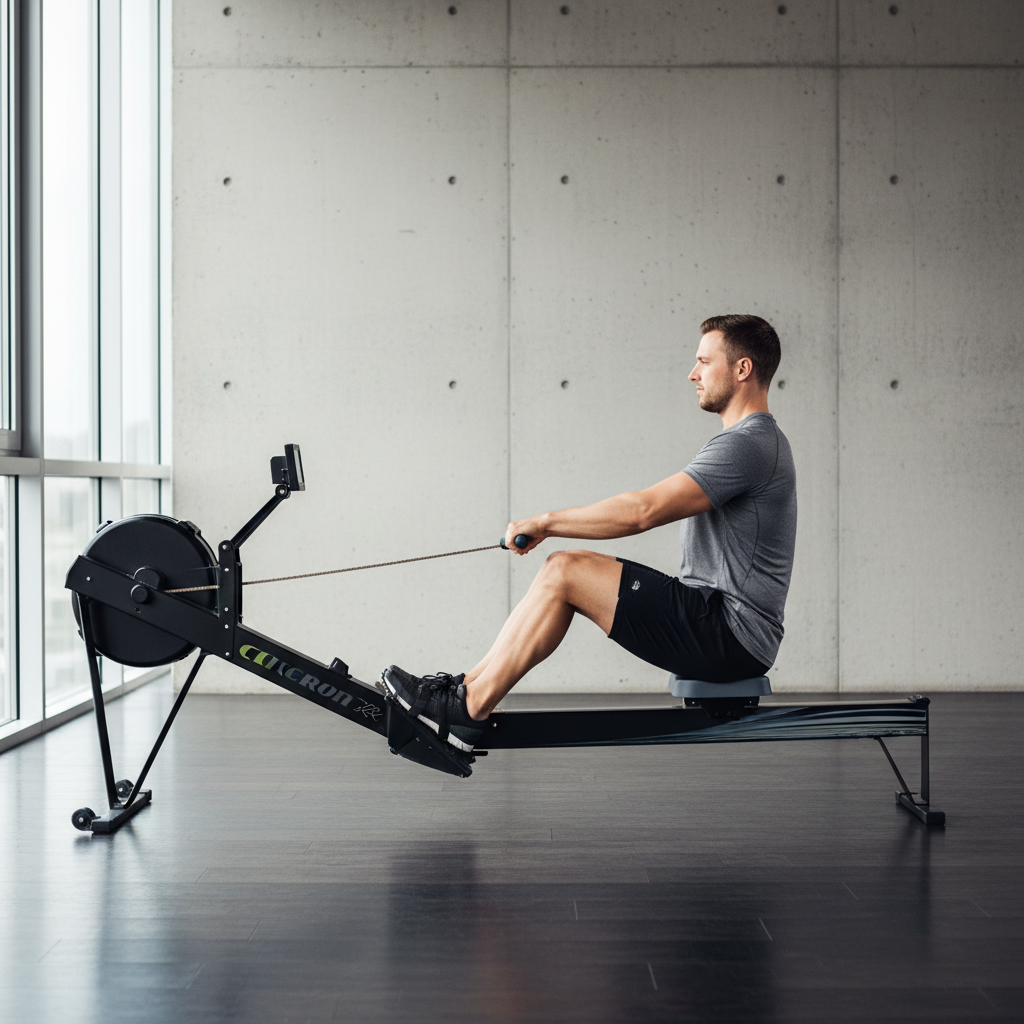
Why a rowing machine really works as full-body training
The big win is that rowing blends strength-like effort with cardio, so you get a lot done in a short window. Many workouts feel “all arms,” though that’s usually a technique problem, not a machine problem.
- Leg drive starts the stroke, think of it like a horizontal squat push.
- Hip hinge and trunk stability transfer power, your core resists collapsing.
- Upper back and lats finish the pull, shoulders stay down and back.
- Arms guide the handle at the end, they shouldn’t be the engine.
According to the American Council on Exercise (ACE), rowing can be an efficient low-impact cardio option that engages multiple major muscle groups when performed with proper technique, which is exactly what you want from a full-body session.
Quick technique reset: the cues that change everything
If your lower back tightens up or your forearms blow up early, it’s usually because the sequence gets scrambled. Keep the rhythm simple, then add intensity.
The stroke in plain English
- Drive: legs push, then body swings slightly back, then arms pull.
- Recovery: arms extend, body pivots forward, then knees bend.
Two cues worth remembering
- “Hang off the handle.” You should feel lats and back, not a death-grip forearm pull.
- “Push the machine away.” This keeps the legs as the main engine.
Set your damper based on feel and control, not ego. Many people do better in the mid range because it helps maintain speed and clean mechanics, but factors like machine model and your experience level can change what feels right.
Self-check: which rowing machine workout do you actually need?
Pick your main session based on what you want most right now. Mixing random “hard rows” with random rest tends to feel tough without delivering clear improvements.
| Goal | What it should feel like | Best workout type |
|---|---|---|
| Fat loss / general fitness | Steady, sustainable breathing | Zone 2 steady row + short finisher |
| Cardio capacity | Hard efforts with recoveries you can repeat | Intervals (time or distance) |
| Strength feel / power | Explosive legs, crisp strokes, longer rest | Short sprints + low stroke rate focus |
| Beginner confidence | Technique stays calm the whole time | Technique blocks + easy pacing |
- If your form breaks after 5 minutes, start with technique blocks.
- If you can row 20 minutes but never get faster, add structured intervals.
- If you always go “medium hard,” choose either truly easy or truly hard days.
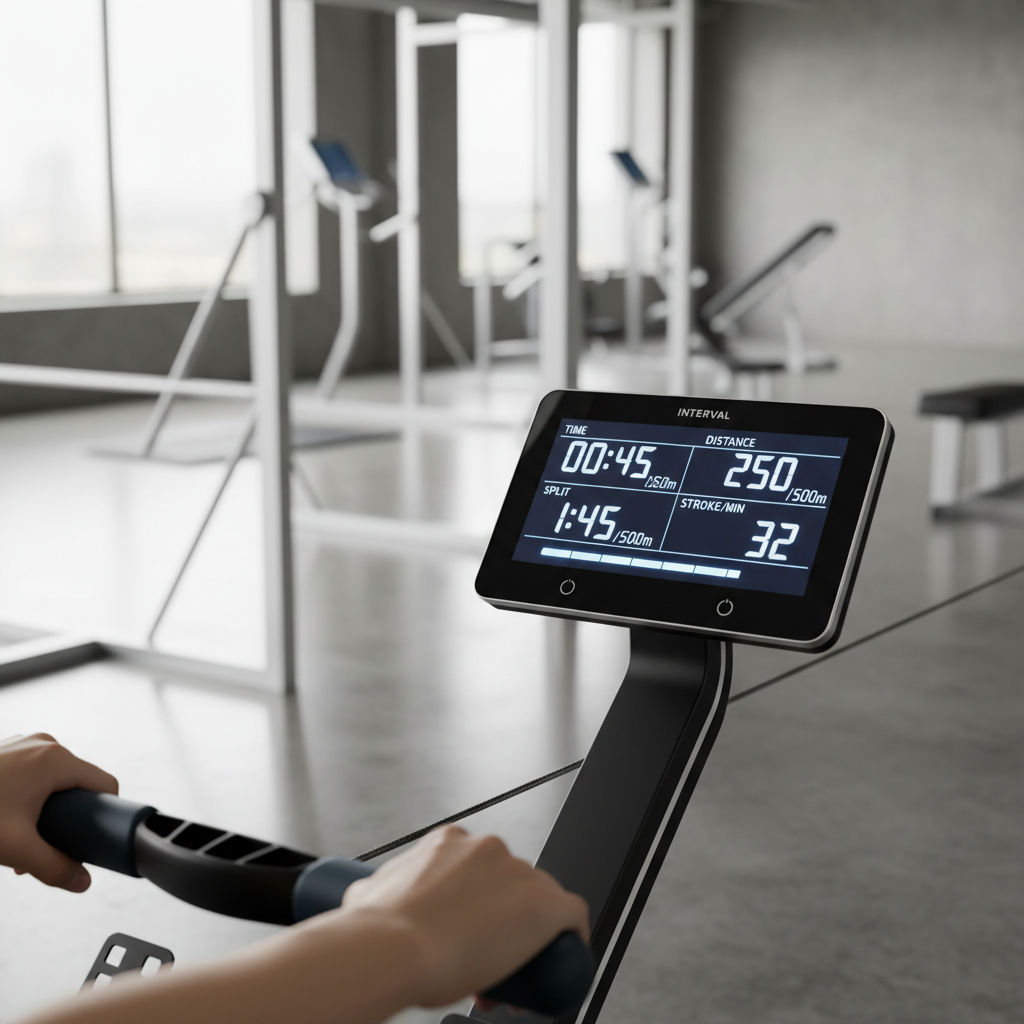
The full-body rowing machine workout (45 minutes, balanced)
This is a “default” full-body session that works for a lot of people, especially if you train 2–4 times per week and want both strength and conditioning. Keep it controlled, then let the intervals do the work.
1) Warm-up (8–10 minutes)
- 3 minutes easy rowing, nasal breathing if possible
- 3 minutes building effort slightly every minute
- 2–4 minutes of technique focus: 10 strokes legs-only, 10 strokes legs + body, then normal rowing
2) Main set (18 minutes)
- 6 rounds: 2 minutes moderate-hard + 1 minute easy
- Goal: same pace each hard round, don’t sprint the first two and survive the rest
3) Strength feel block (8 minutes)
- 8 rounds: 20 seconds strong (powerful leg drive, lower stroke rate) + 40 seconds easy
- Think “crisp and clean,” not “flailing fast.”
4) Cooldown (5–8 minutes)
- Easy rowing until breathing settles
- Optional gentle hip hinge stretch and upper-back mobility
Key point: If you can’t keep a neutral spine during the hard work, back off the intensity and earn the pace with cleaner strokes.
3 variations you can rotate (so you don’t plateau)
Rotating sessions keeps motivation up and helps you adapt without turning every workout into a sufferfest. Use one variation per week, or cycle them across a month.
Variation A: Beginner-friendly technique + cardio (30–35 minutes)
- 10 minutes easy row with 10-stroke technique check every 2 minutes
- 10 rounds: 1 minute moderate + 1 minute easy
- 5 minutes cooldown
Variation B: Conditioning intervals (classic, repeatable)
- Warm-up 8 minutes
- 5 x 500 meters hard with 2 minutes easy rowing between
- Cooldown 6 minutes
Variation C: Low-impact steady state (the “boring” one that works)
- 25–40 minutes continuous at a conversational effort
- Every 5 minutes: 10 strokes slightly stronger, then return to easy
According to the Centers for Disease Control and Prevention (CDC), adults generally benefit from regular aerobic activity each week, and a rowing machine session can help you contribute toward that, assuming intensity and volume match your fitness level.
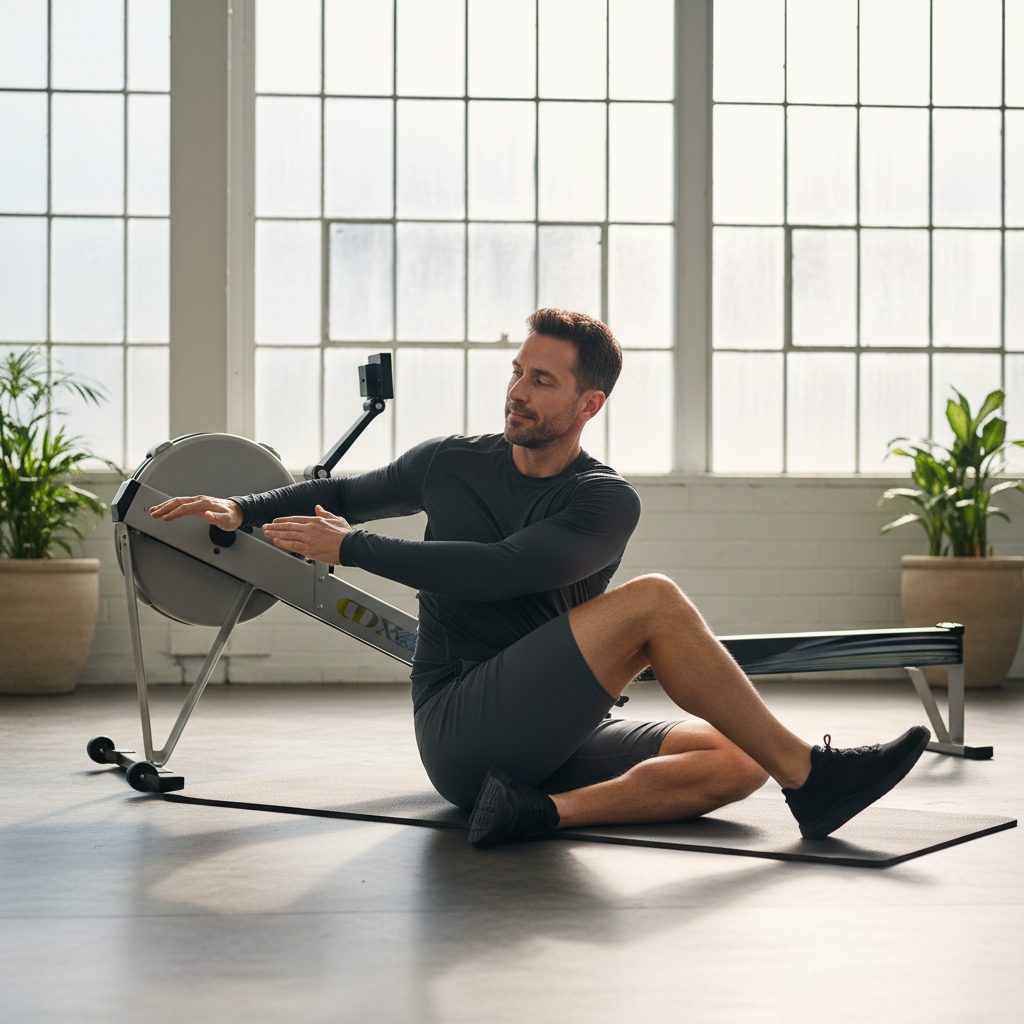
Common mistakes that make rowing feel “not full-body”
Most frustrations come from a few predictable patterns. Fixing them usually makes the same workout feel smoother and tougher in a good way.
- Starting the pull with the arms, your legs never get to contribute much.
- Rounding the low back at the catch, often caused by reaching too far forward.
- Letting knees pop up early on the recovery, the handle has to go around the knees, rhythm breaks.
- Chasing high stroke rate instead of better power per stroke, you get tired without moving faster.
- Skipping easy days, everything becomes medium-hard, recovery suffers, pace stagnates.
If something hurts sharply, gets worse during the session, or lingers for days, treat that as a signal to pause and get assessed. Discomfort from effort is normal, joint pain is a different category.
How to progress week to week (without guessing)
Progress on a rowing machine is usually about repeatability. You want small wins you can stack, not random hero days.
- Pick one metric: pace (split), distance, or total time, then improve only one at a time.
- Add volume carefully: 5 more minutes to a steady row, or 1 more interval, not both in the same week.
- Keep technique as the limiter: if form slips, the session stops being full-body and becomes “whatever survives.”
- Use a simple schedule: 1 steady session, 1 interval session, 1 optional easy technique row.
Quick takeaway list:
- Legs drive the stroke, arms finish it.
- Intervals create change, steady rows build the base.
- Consistency beats intensity spikes most weeks.
When to get coaching or medical guidance
If you’re new, a single technique session with a coach can speed up progress because you get live cues on posture, sequencing, and pacing, which videos can’t always correct. It also helps if you train for a specific test, race, or sport and need targeted programming.
If you have a history of disc issues, persistent shoulder pain, or knee symptoms that flare with rowing, it’s wise to consult a qualified healthcare professional. Many people can still row, but modifications often matter, handle height, stroke length, and intensity choices can change how stress distributes.
Conclusion: a rowing machine plan that actually feels full-body
A full-body Rowing Machine workout usually comes down to two things, clean sequencing and a session structure that matches your goal. Start with the balanced 45-minute plan, rotate one variation weekly, and track one metric so you can see progress without overthinking it.
If you want a simple next step, do the workout once this week and write down your average pace for the 2-minute rounds, then try to match or slightly improve it next time while keeping form steady.