
Training Log is the simplest way to turn “I think I’m improving” into something you can actually verify, week to week, lift to lift. If your workouts feel random, your motivation spikes and crashes, or you keep repeating the same weights, it’s usually not a willpower problem, it’s a tracking problem.
A good log does more than record numbers, it shows patterns: what helps you progress, what stalls you, and what recovery really looks like in your life. Many people train hard for months but can’t answer basic questions like “Which rep range moves best for me?” or “Am I adding volume too fast?” Logging fixes that.
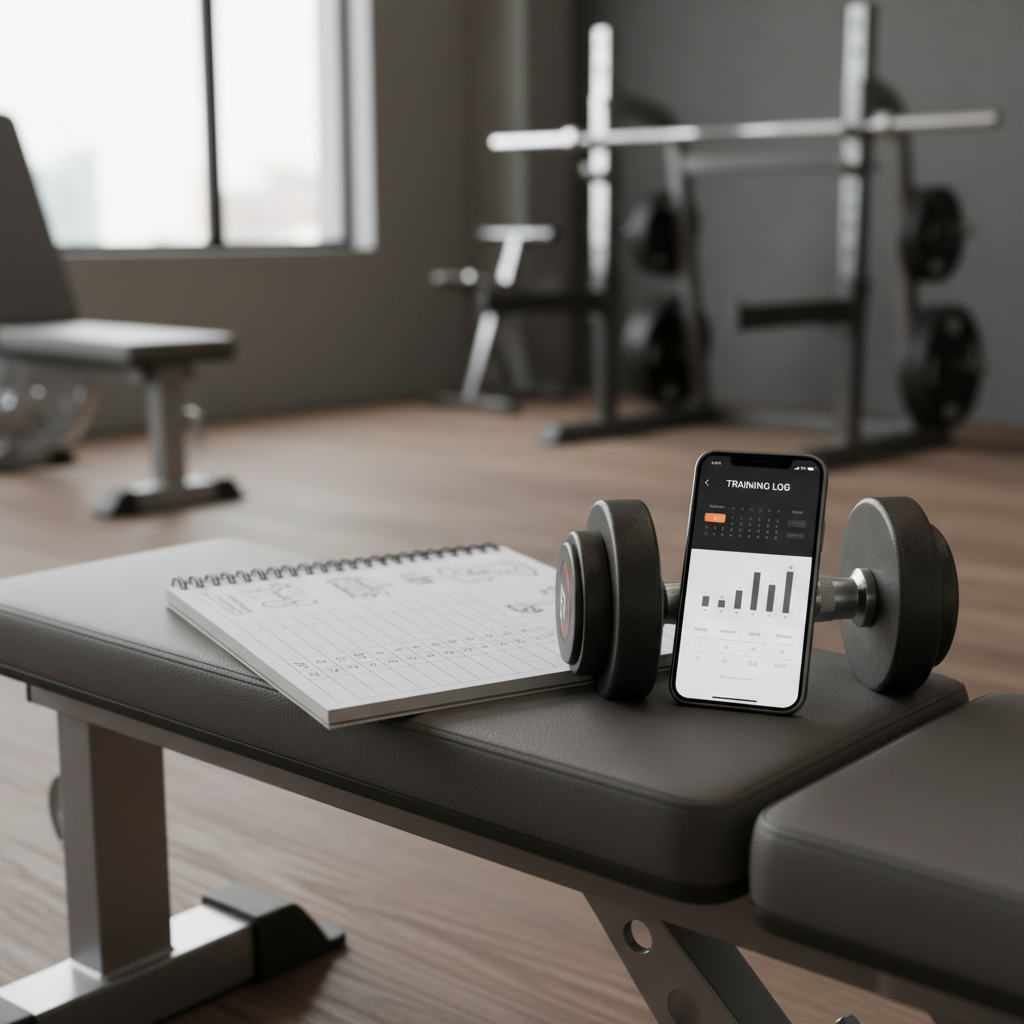
This guide keeps it practical: what to write down, how detailed to get, and how to use your notes to make smart changes. You’ll also get a simple template plus a few “if this, then that” rules for common plateaus.
Why a training log works when motivation doesn’t
Most training plans look great on paper, then reality shows up: bad sleep, busy weeks, sore elbows, travel, stress. A training log helps you stay honest without being harsh, because it captures context, not just the highlight reel.
- Progress becomes measurable: You can see if strength, reps, or total weekly work trends upward.
- Plateaus become diagnosable: Stalls often come from volume spikes, poor recovery, or repeating the same intensity.
- Form and pain patterns show up: Notes like “knee felt sketchy on deep reps” matter as much as weight.
- Consistency improves: Showing up feels easier when you know exactly what “today’s job” is.
According to the American College of Sports Medicine (ACSM), progressing training variables over time and monitoring response are core parts of safe, effective programming. Your log is basically the tool that makes that possible in real life.
What to track (and what to skip) for workout progress
If you track everything, you usually track nothing. The goal is a training log that takes under two minutes to fill out during a session, then gives you clear signals later.
The “must-have” fields
- Date + session type (Lower A, Push, Full Body, etc.)
- Exercise (include variation: high-bar squat vs. safety bar)
- Sets × reps × load (or bodyweight variation details)
- Effort rating (RPE or “reps in reserve” works well)
- Rest time (roughly, not to the second)
The “nice-to-have” fields (use only if helpful)
- Technique cue: “braced better,” “kept elbows tucked”
- Pain or warning notes: location, movement, severity trend
- Sleep and stress: quick 1–5 rating
- Bodyweight: helpful for cutting/bulking phases
What to skip for most people: overly detailed tempo notation on every accessory, long journal entries mid-workout, and random “felt strong” notes without any numbers attached.
A simple training log template you can copy today
Use this as-is in a notes app, spreadsheet, or paper notebook. The format matters less than consistency.
| Exercise | Set 1 | Set 2 | Set 3 | Effort (RPE/RIR) | Notes |
|---|---|---|---|---|---|
| Bench Press | 135×8 | 135×8 | 135×7 | RPE 8 | Paused reps felt cleaner |
| Row (DB) | 60×10 | 60×10 | 60×10 | RIR 2 | Keep ribs down |
| Squat | 185×5 | 185×5 | 185×5 | RPE 7 | Knee OK after longer warm-up |
If you want one extra line that pays off later, add: “Top set + back-off sets”. It makes progression decisions much easier than treating every set the same.
How to review your log weekly (the part most people never do)
A training log only becomes a progress tool when you review it. This can be 10 minutes on Sunday, not a big production.
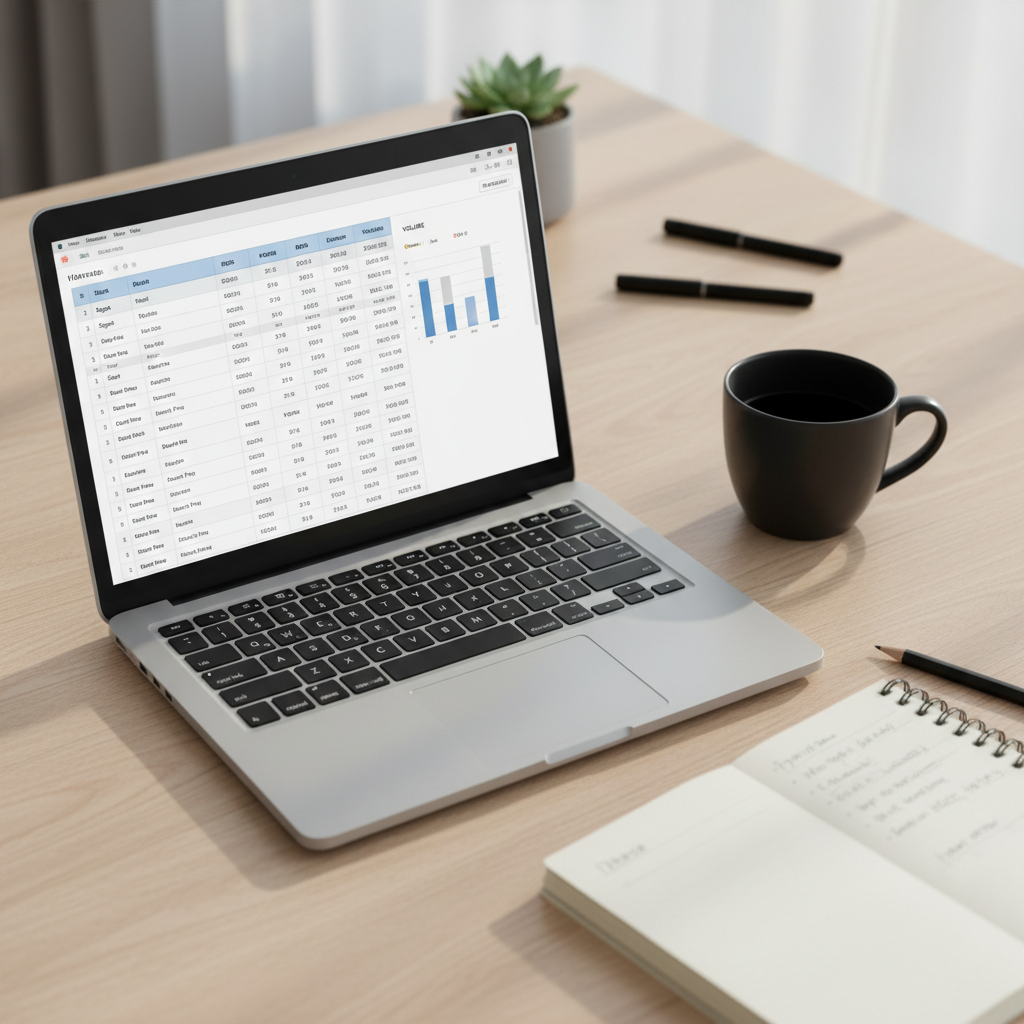
Three quick checks usually cover 90% of situations:
- Performance trend: Did you add reps, load, or cleaner technique on the main lifts?
- Total work trend: Did your weekly sets for each muscle jump a lot, or stay stable?
- Recovery flags: Any repeated notes like “sleep 4/5 days bad” or “elbow cranky on pressing”?
Many lifters panic when one session is worse than last week. Your log helps you zoom out. A single off day happens; a two- to three-week downward drift means something needs adjusting.
Using a training log to break through plateaus (without guesswork)
When progress stalls, the right move depends on what your training log shows. This is where logging stops being “tracking” and starts being coaching yourself.
If strength stalls on a main lift
- Check effort notes: If your sets live at RPE 9–10, you might need slightly more submax work for a few weeks.
- Look for rep drop-offs: If set 1 is strong and sets 2–3 crash, consider longer rest or fewer hard sets.
- Microload: Add 2.5–5 lb instead of 10 lb, especially on upper-body lifts.
If size goals stall
- Compare weekly sets: If volume never changes, your body may have adapted; add 2–4 sets per muscle per week for a block.
- Check exercise variety: The log often shows you repeat the same angles; rotate one accessory per muscle.
- Watch recovery notes: More volume helps until it doesn’t, your log should show sleep, soreness, and performance together.
If you keep “restarting” after missed weeks
- Create a minimum plan: Log a 2-day fallback routine so you don’t disappear for 14 days.
- Use ranges: “3×6–10” instead of “3×8,” then progress when you hit the top of the range.
According to the National Strength and Conditioning Association (NSCA), training outcomes depend heavily on managing volume and intensity over time. Your notes are what let you manage those variables without relying on memory.
Common training log mistakes that quietly slow progress
This is the stuff that looks minor, but it’s why many logs become clutter instead of clarity.
- Only logging “best sets”: If you skip the ugly sets, you miss fatigue trends and pacing issues.
- Changing too many things at once: New program, new diet, new supplements, new sleep schedule, your log turns into noise.
- No standard for effort: Writing “hard” means nothing unless you use RPE/RIR consistently.
- Ignoring warm-ups: You don’t need to log every warm-up set, but noting “needed extra ramp sets” can explain performance dips.
- Reviewing only when you’re frustrated: A quick weekly check prevents the bigger stall later.
Also worth saying: don’t let the training log become a reason to stare at your phone for five minutes between sets. Track, lift, move on.
When to get extra help (and what to bring)
If your log shows repeated pain, big performance drops, or you feel stuck in a loop of “push hard, crash, repeat,” that’s a good moment to talk to a qualified coach or healthcare professional. This is especially true if symptoms persist, worsen, or affect daily life.

Bring three things: your last 4–8 weeks of entries, your goal in one sentence, and a short note on constraints like schedule, injuries, equipment. A good professional can spot patterns quickly when your training log is clean and consistent.
Key takeaways and a simple next step
Keep your training log boring and reliable: exercises, sets, reps, load, effort, plus one useful note. Review it weekly, and let the patterns guide small adjustments rather than dramatic program hopping.
- Start today: log your next session with the “must-have” fields only.
- Schedule a 10-minute review: pick one day each week and make it automatic.
If you do that for a month, you’ll almost always train with more intention, and you’ll have real evidence for what works for you.
FAQ
What’s the best format for a training log, app, spreadsheet, or notebook?
The best format is the one you’ll actually use mid-workout. Apps are fast, spreadsheets are great for weekly review, and notebooks feel simple. Pick one and stick with it long enough to learn from the patterns.
How detailed should my training log be for strength goals?
Track sets, reps, load, and effort on your main lifts, then keep accessories lighter on detail. Strength progress often comes down to small changes, so having consistent effort notes helps a lot.
Should I track RPE or reps in reserve?
Either works if you use it consistently. Many people find reps in reserve more intuitive, because it ties to “how many more reps could I do with good form?”
How do I log workouts if I train with machines or classes?
Log machine settings, load, reps, and a quick note like “seat 6, grip wide.” For classes, record the workout type, key movements, and a personal metric like pace, rounds, or average effort.
What if my training log shows I’m getting weaker?
Look for context first: sleep, stress, diet changes, big volume spikes, or reduced rest times. If the downward trend lasts multiple weeks, consider a deload, simpler progression, or professional guidance.
How long until a training log shows meaningful progress?
Often within 2–4 weeks you’ll see rep PRs, better consistency, or clearer recovery patterns. For bigger strength changes, you usually need a longer view, closer to 6–12 weeks.
Do I need to track calories and macros in the same log?
Only if nutrition is a bottleneck for your goal. For many people, keeping training and nutrition separate avoids burnout, but adding weekly bodyweight and a simple “protein OK/not OK” note can be a good middle ground.
If you want a more effortless setup
If you’re already training but your tracking feels messy, consider building a one-page training log template you can reuse every week, or setting up a spreadsheet that totals weekly sets automatically. It’s a small upfront effort, and it often saves you from months of guessing.