
Running Belt problems usually show up fast: it bounces, rides up, digs into your waist, or somehow still can’t fit your phone without feeling bulky. If you’ve ever spent a run adjusting your gear instead of enjoying it, you’re not being picky, you’re reacting to a bad fit or the wrong features for your routine.
This guide breaks down what actually matters when you’re buying a belt for a phone and a few essentials, keys, a gel, maybe an ID or card. You’ll see how to match belt style to run type, how to size it so it stays put, and what to skip even if the marketing looks great.

I’ll also call out a few common misunderstandings, like assuming “bigger pocket” equals “better,” or choosing compression so tight it feels secure in the living room but miserable at mile three. By the end, you should know what to buy, and how to wear it so it behaves.
What makes a running belt work (or fail) in real life
A belt looks simple, but small design choices decide whether it stays comfortable for 20 minutes or for an hour. In most cases, failures come from a mismatch between fit, load, and where you wear it.
- Bounce comes from slack: If the belt can move independently from your body, it will, especially with a phone.
- Ride-up comes from shape: Many runners have a narrower waist and wider hips, so a straight belt naturally crawls upward unless placement is right.
- Chafing comes from edges and seams: Scratchy zippers, stiff binding, or a belt that twists under load can irritate skin fast.
- Phone fit issues come from pocket geometry: A pocket can be “big enough” but still awkward if the zipper opening is narrow or the fabric doesn’t stretch the right way.
- Sweat management is underrated: If the phone sits against your body, it may get damp in hot weather or humid climates.
According to CDC, adults generally benefit from regular physical activity for overall health. Comfort gear doesn’t replace training, but it can remove friction points that make consistency harder, especially for newer runners.
Quick self-check: which belt style fits your runs?
Before you compare materials and pockets, decide what you actually need to carry and how much movement you tolerate. This short checklist helps narrow options without overthinking.
Pick your “carry level”
- Minimal: key, card/ID, one gel.
- Standard: phone + key + card + one gel, maybe earbuds case.
- Long-run: phone + multiple gels + small soft flask, maybe pepper spray depending on local comfort and legality.
Match to your run environment
- Hot/humid: prioritize breathable fabric, less skin contact, easy wash.
- Rainy: look for water-resistant materials or a lined pocket, still assume “resistant” not waterproof.
- Low light: reflective accents help, but still consider lights for safety.
If you’re between sizes, the safer bet for most runners is the one that fits snugly without forcing you to “brace” your core to breathe comfortably. If you have any medical or post-surgery considerations, it’s reasonable to consult a clinician about compression around the abdomen.
Running belt feature breakdown (what matters, what’s hype)
Not every feature is essential, but a few are worth prioritizing for a phone-and-essentials setup. Here’s the practical short list.
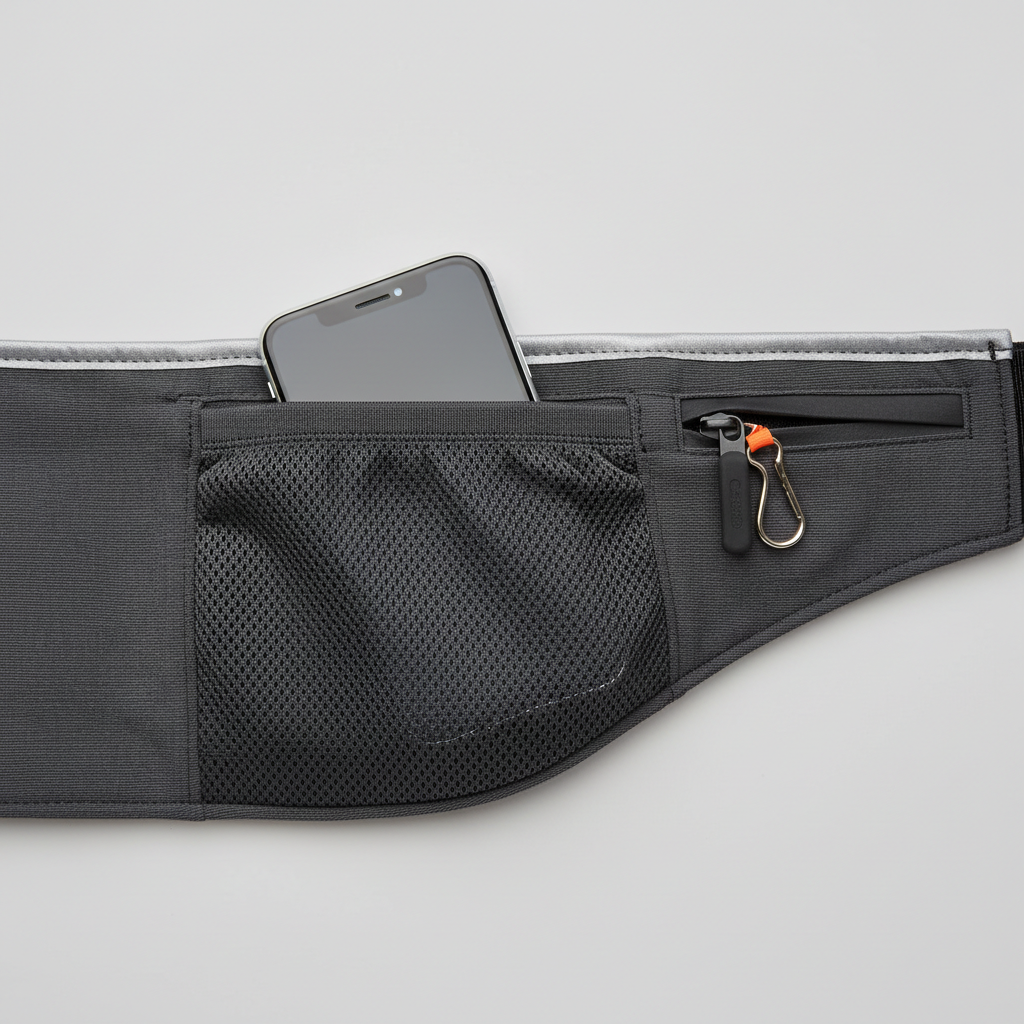
- Secure closure: A smooth zipper is common for phones; a fold-over pocket can work if it holds firmly and doesn’t gap when you move.
- Stretch with structure: Too stretchy feels comfortable at first, then sags mid-run; too stiff can dig in.
- Wide, flat waistband: Often reduces pressure points and twisting, especially for standard loads.
- Key management: A key clip or internal loop prevents that constant jingling and poking.
- Reflective hits: Helpful as a backup, not a replacement for visibility gear.
What’s often over-sold: “one size fits all,” ultra-thin belts that only work if you carry almost nothing, and giant multi-pocket designs that turn your waist into a storage shelf.
Fit and sizing: how to stop bounce and ride-up
A Running Belt that fits well should feel like part of your outfit, not a separate accessory. Two adjustments make the biggest difference: where you place it, and how you load it.
Where to wear it
- High hip placement: Many runners find the belt behaves better sitting slightly lower than the natural waist, closer to the top of the hips.
- Rotate the pocket: Try the phone pocket slightly off-center, it can reduce direct bounce and also feels less “brick-like” on the front.
- Over vs under layers: Over a thin shirt can reduce sweat exposure; under a shirt may reduce snags but can trap moisture.
How tight is “tight enough”
- It should stay put when you hop in place with your phone loaded.
- You should still be able to take a deep belly breath without feeling squeezed.
- If the belt curls at the top edge, it’s usually too tight or too narrow for your body shape.
Small note: sizing varies by brand, so relying on pants size alone can mislead. If a brand provides a waist measurement chart, that’s usually the better reference.
Phone fit, sweat, and access: practical tips that save frustration
Most people buying a belt for “phone and essentials” really want three things: the phone fits quickly, stays stable, and doesn’t get soaked. You can improve all three with a couple habits.
- Face the screen toward your body to reduce accidental button presses and limit screen exposure to rain, though sweat protection may still matter.
- Use a slim case on run days if your everyday case is bulky, many pockets fit “a phone” but not “a phone plus armor.”
- Separate hard items like keys from the phone, either via internal divider, key clip, or by placing keys on the opposite side.
- Plan your access: gels in the easiest pocket, keys in the most secure spot, cards flat so they don’t bend.
If sweat is a consistent issue, a water-resistant pocket helps, but it’s still smart to put your phone in a small plastic bag or dedicated sleeve for longer runs or peak summer heat.
Comparison table: common running belt types for phone + essentials
There’s no universal winner, but some styles are more forgiving depending on what you carry and how sensitive you are to bounce.
| Type | Best for | Pros | Trade-offs |
|---|---|---|---|
| Zip pocket belt | Phone + keys + card | Secure closure, predictable fit | Zipper can chafe if poorly designed |
| Stretch “tube” belt | Low-bounce carry, minimal-to-standard | No hard buckle, often very stable | Access can be slower, sizing must be right |
| Buckle belt with pockets | Adjustable fit across layers | Easy to tighten, quick on/off | Buckle can press into skin, more bounce risk |
| Hydration waist belt | Long runs with fluids | Carries bottle(s) plus phone | Heavier, more movement unless dialed in |
Common mistakes (and what to do instead)
A lot of belt disappointment comes from buying a solid product and using it in the worst possible setup for your body and route.
- Mistake: loading everything on the front. Fix: split the load, phone slightly off-center, keys to the side or back.
- Mistake: buying for “maximum capacity”. Fix: buy for your normal run, then decide if you need a different system for long runs.
- Mistake: wearing it at the narrowest waist. Fix: test high hip placement, it often reduces ride-up.
- Mistake: ignoring chafing until it’s bad. Fix: adjust early, consider anti-chafe balm, and avoid rough zippers against bare skin.
- Mistake: expecting water resistance to equal waterproof. Fix: add a simple phone sleeve when weather looks uncertain.

According to ACSM, hydration and heat safety can matter a lot depending on conditions and run duration. If you’re regularly running in high heat, it may be worth planning carry options that support fluids and electrolytes, and if you have health concerns, ask a professional for individualized guidance.
Practical setup: a simple way to pack your belt before a run
This takes less than a minute and prevents most “why is this so annoying” moments mid-run.
- Phone: place flat, screen toward body, slightly off-center.
- Key: clip it or put it in a small inner pocket so it can’t migrate.
- Card/ID: keep it flat, ideally in a sleeve or separate compartment.
- Gel: easiest-access spot, not sharing space with the phone.
Key takeaway: if the belt feels perfect empty but sloppy when loaded, you don’t need a motivational speech, you need either a snugger fit or a belt with better structure.
Conclusion: choosing a running belt you’ll actually keep using
A Running Belt is worth it when it disappears on your body and keeps your phone and essentials secure without turning every mile into a gear check. Focus on fit first, then pocket design, then small extras like reflective details or water resistance.
If you want a quick next step, do two tests at home: load it with your real phone and keys, then hop in place and jog down the hall. If it stays put and you can breathe comfortably, you’re close. If it bounces now, it won’t magically improve outdoors.
FAQ
- What size running belt should I get for my phone?
Use the brand’s waist measurement chart when available, then confirm the pocket dimensions match your phone size with your usual case. If you’re between sizes, many runners prefer the snugger option as long as breathing stays comfortable. - Should a running belt be worn on the waist or hips?
Many people get less bounce wearing it closer to the top of the hips rather than the narrowest part of the waist. It’s not a rule, but it’s an easy adjustment to try before blaming the belt. - How do I stop my running belt from bouncing?
Snug the fit, distribute items around the belt, and avoid stacking heavy items in one pocket. If bounce persists, a stretch “tube” style often stays more stable than a buckle design for standard loads. - Is a running belt safe for long runs?
Usually yes, but comfort and heat management vary by person and conditions. For long or hot runs, consider hydration needs and watch for chafing; if you have medical concerns, it’s reasonable to consult a professional. - Can I fit a large phone in a running belt?
Often yes, but the opening matters as much as the pocket size. A slightly stretchy pocket with a smooth zipper tends to load easier than a stiff pocket with a narrow zipper path. - Do I need a waterproof running belt?
Most belts are water-resistant at best. If you run in rain or sweat heavily, adding a simple phone sleeve or plastic bag inside the pocket is a practical backup.
If you’re trying to stop carrying your phone in your hand, or you’re tired of pockets that pull your shorts down, a well-fitted belt is often the simplest upgrade. If you tell me your phone model and what you carry on a typical run, I can help narrow the belt style and features that make sense for your routine.