
Sprain Care starts working fastest when you treat the first 24–48 hours like a “swelling control” window, not a “tough it out” test. Most sprains improve with the right home plan, but the early choices you make can change how long pain lingers and how stable the joint feels later.
A sprain means a ligament got stretched or torn, usually after a twist, roll, or awkward landing. That can happen at the ankle, wrist, knee, thumb, even a toe. And here’s the annoying part: mild sprains can feel dramatic, while more serious injuries sometimes feel “not that bad” at first.
This guide focuses on practical, real-life decisions: what to do immediately, what to avoid, how to tell if it might be more than a sprain, and how to rebuild strength without re-injuring yourself. If you want a quick takeaway, it’s this: control swelling, protect the joint, then restore motion and strength in a planned way.
What “Sprain” Really Means (and Why It Matters)
A sprain is a ligament injury. Ligaments are the tough bands that stabilize joints, so when they’re overstretched, the joint can feel painful, swollen, and unstable.
- Grade 1: stretched ligament, mild swelling, usually stable.
- Grade 2: partial tear, more swelling/bruising, some looseness.
- Grade 3: complete tear, major instability, sometimes surprisingly less pain after the initial injury.
Why this matters: a higher-grade sprain often needs medical evaluation, sometimes immobilization, and a more structured rehab plan. Many lingering “weak ankles” are really incomplete rehab after a moderate sprain.
First 48 Hours: The “Do This, Not That” Plan
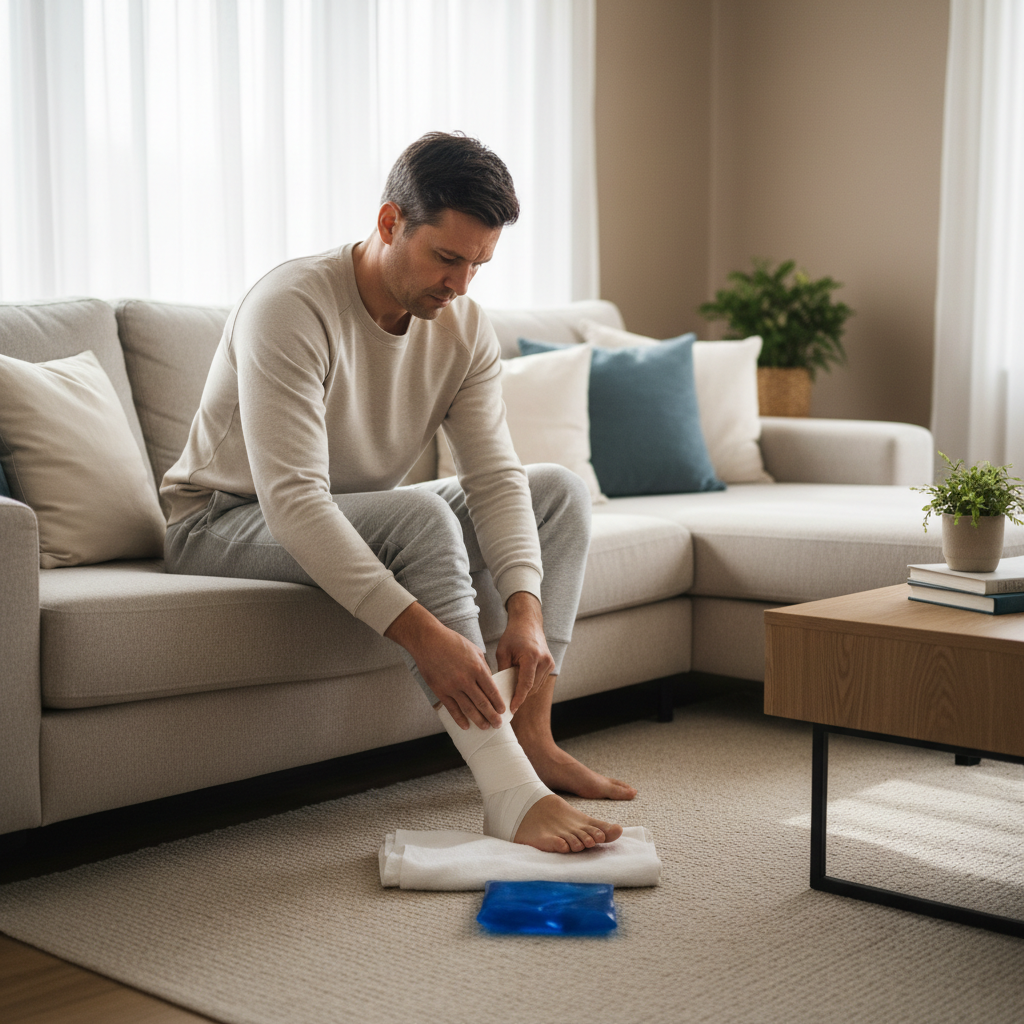
Sprain Care in the first two days is mostly about protecting tissue and limiting swelling so movement can return sooner. According to AAOS (American Academy of Orthopaedic Surgeons), early care commonly includes rest, ice, compression, and elevation to help manage pain and swelling.
What to do
- Protect: brace, wrap, or splint if the joint feels wobbly. Use crutches if walking causes a limp.
- Ice: 15–20 minutes at a time, several times daily. Keep a thin barrier (like a towel) to avoid skin injury.
- Compression: elastic wrap or compression sleeve, snug but not numb/tingly.
- Elevate: above heart level when possible, especially the first day.
- Pain control: acetaminophen or NSAIDs may help, but follow label directions and consider your medical history.
What usually slows recovery
- Heat early on: heat can increase swelling in the first day or two.
- “Walking it off” with a limp: a limp often means you’re loading tissue that needs protection.
- Over-tight wraps: numbness, color change, or cold toes/fingers means loosen it.
Key point: you’re aiming for “comfortable support + gentle movement,” not total immobility unless a clinician recommends it.
Quick Self-Check: Is It Likely a Simple Sprain or Something Else?
Use this as a fast sorting tool. It doesn’t diagnose you, but it helps you decide how cautious to be.
| What you notice | Often suggests | What to do next |
|---|---|---|
| Mild swelling, can bear weight, pain improving day to day | Lower-grade sprain | Home care + gradual rehab |
| Major swelling/bruising within hours, joint feels loose | Moderate to severe sprain | Consider prompt evaluation, brace |
| Can’t take 4 steps, severe pain over bone | Possible fracture | Urgent care/ER for imaging |
| Deformity, numbness, blue/cold fingers/toes | Circulation/nerve issue or dislocation | Emergency evaluation |
| Calf swelling/pain after lower-limb injury | Other conditions possible | Seek medical advice quickly |
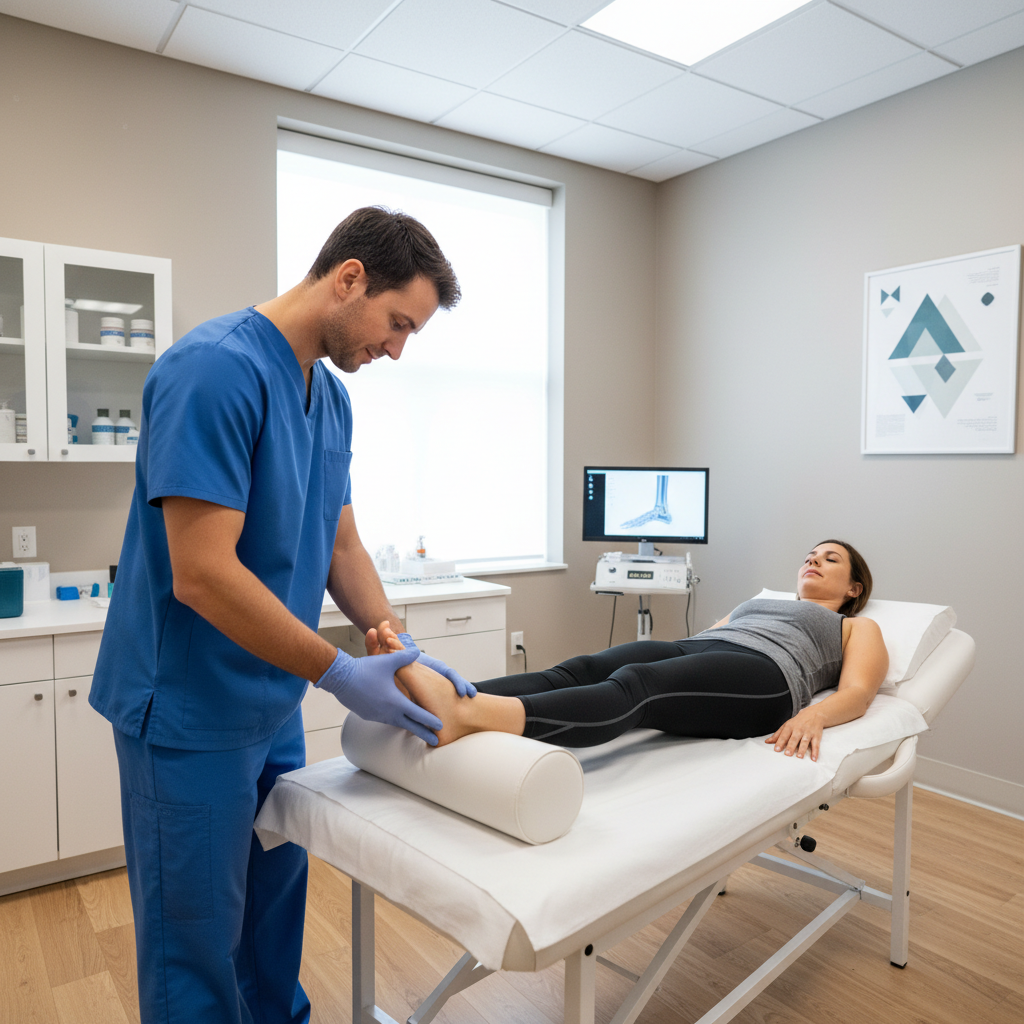
If you’re unsure, it’s reasonable to be conservative. Many people wait because they can “kind of” walk, but instability plus swelling often benefits from early guidance.
Step-by-Step Recovery Plan (Days 3–14 and Beyond)
Once swelling and sharp pain settle, Sprain Care shifts to restoring motion, then strength, then confidence. This is where people rush, and that’s usually where re-sprains happen.
Phase 1: Restore comfortable range of motion
- Gentle circles or alphabet motions (ankle/wrist) within a pain-limited range.
- Short, frequent sessions beat one long session.
- If swelling spikes afterward, you did too much.
Phase 2: Build strength and stability
- Isometrics: press into a towel or your hand without moving the joint.
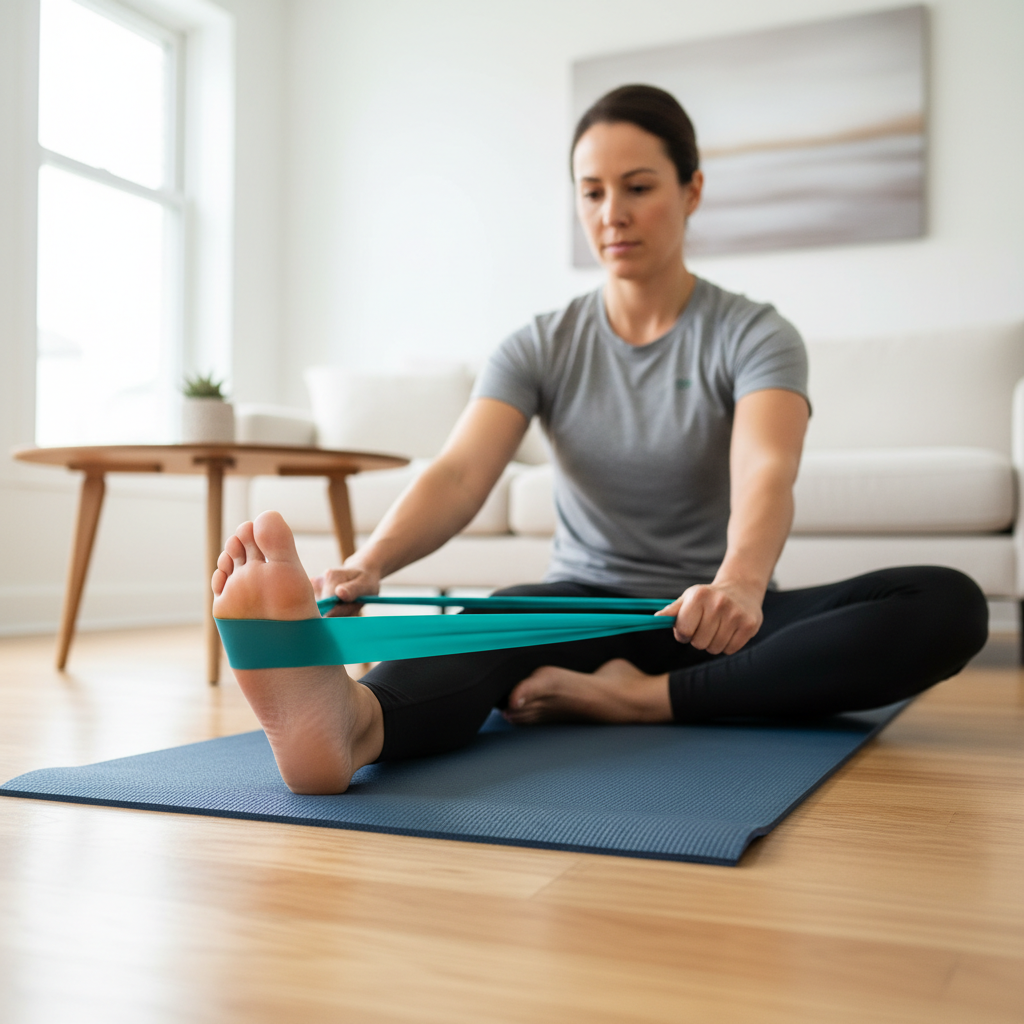
- Progress to resistance bands when motion feels smoother.
- Balance work for ankle sprains: single-leg stand near a counter for safety.
Phase 3: Return to activity
- Start with straight-line walking, then light jogging, then cutting/pivoting if relevant.
- Use a brace for higher-risk activities early in your return.
- Stop if you’re compensating or limping, that’s your cue to back up a step.
Practical benchmark: many people do better when they can walk briskly without pain, swelling is minimal the next morning, and the joint feels stable during basic balance tasks.
Common Sprain Care Mistakes That Keep People Stuck
A lot of “it never fully healed” stories come from predictable missteps, not bad luck.
- Skipping rehab once pain fades: pain often improves before stability returns.
- Only resting: too much rest can stiffen the joint and slow tissue remodeling.
- Too much too soon: swelling that rebounds at night is a classic sign.
- Ignoring footwear and surfaces: slippery shoes or uneven ground invite repeat injury.
- Assuming every ankle injury is a “simple roll”: high ankle sprains and tendon injuries exist and can change the plan.
When to Get Medical Help (and What They May Check)
Sprain Care at home is reasonable for many mild injuries, but certain signs deserve evaluation. According to CDC (Centers for Disease Control and Prevention), injury symptoms such as severe pain, inability to use the limb, or worsening symptoms can warrant medical attention.
- Inability to bear weight or use the joint normally after a short rest period
- Bone tenderness, visible deformity, or a “pop” with immediate major swelling
- Numbness, tingling, coldness, or color change beyond the wrap
- Swelling or pain that keeps getting worse after day 2–3
- Repeated sprains or ongoing instability weeks later
A clinician may do stability tests, assess range of motion, and decide whether imaging is needed to rule out fracture or other injuries. If you have medical conditions, take blood thinners, or have diabetes with reduced sensation, it’s smart to seek guidance earlier rather than later.
Practical Checklist: What to Keep at Home for Faster Recovery
You don’t need a full sports clinic setup, but a few basics make Sprain Care easier and more consistent.
- Elastic wrap or compression sleeve in the right size
- Reusable ice pack (or a bag of frozen peas in a pinch)
- Supportive brace for the joint that’s injured (especially ankle/wrist)
- Resistance band (light to medium)
- Simple pain reliever you can safely take, if needed
Small habit that helps: jot down swelling/pain notes for 3–5 days. If the trend isn’t improving, you’ll have clearer info to share with a clinician.
Conclusion: A Faster Recovery Is Usually a Smarter Recovery
Good Sprain Care is less about finding one magic trick and more about timing: protect and calm swelling early, then rebuild motion and stability with steady progress. If symptoms feel out of proportion, function is not coming back, or the joint keeps giving way, getting a professional evaluation can save you weeks of guesswork.
If you want one simple action today, choose a support strategy you can actually stick with for the next week, then schedule short daily rehab sessions so you don’t rely on “feels better” as your only green light.
FAQ
How long does a sprain usually take to heal?
It varies by joint and severity. Mild sprains may feel much better within 1–2 weeks, while moderate sprains often take several weeks. If instability or swelling lingers, it’s worth getting checked.
Is it better to rest completely or keep moving?
Early protection matters, but complete rest for too long can create stiffness. A common approach is pain-limited movement once sharp pain and major swelling calm, ideally with support like a brace.
Should I use heat or ice for a sprain?
Ice is commonly preferred in the first 24–48 hours for swelling and pain control. Heat may feel good later for stiffness, but if heat makes swelling worse, back off and consider returning to cold.
What if I heard a “pop” when I got injured?
A pop can happen with sprains, but it can also signal a more significant tear or other injury. If the joint feels unstable, swelling is rapid, or you can’t use the limb normally, a prompt evaluation is a safer call.
How tight should a compression wrap be?
Snug enough to reduce swelling, not so tight that you get tingling, numbness, or color changes in fingers/toes. If any of those show up, loosen the wrap and recheck circulation.
Do I need a brace for an ankle sprain?
Many people find a brace helpful, especially if walking triggers pain or the ankle feels wobbly. For sports or uneven surfaces, a brace can reduce re-injury risk while you rebuild strength and balance.
When can I return to sports after a sprain?
Usually when you can move through full range without sharp pain, swelling stays controlled the next day, and you can hop, cut, or grip (depending on the joint) without instability. If you’re unsure, a physical therapist can help set return-to-play checks.
Key Takeaways
- Early swelling control often shortens the “stuck” phase.
- Support + gradual movement typically beats either extreme.
- Rehab matters even when pain fades, stability returns later.
- Red flags like inability to bear weight, numbness, or deformity deserve medical evaluation.
If you’re dealing with a sprain and want a more tailored plan, consider checking in with a physical therapist or sports medicine clinician, many can suggest a brace choice and a simple progression that fits your activity goals without overdoing it.