
Plantar Fasciitis is one of those injuries that can feel unfair: you’re doing something healthy, and your heel answers back with sharp, morning-after pain.
If you run in the U.S., you’ve probably heard five different “fixes” from five different people, stretch more, change shoes, roll a frozen bottle, power through. Some of those help, some waste time, and a few can keep you stuck in the cycle.
This guide focuses on what tends to work for runners in real life: calming symptoms, keeping fitness, then building back without re-triggering that first-step-in-the-morning sting. You’ll get a quick self-check, a simple plan, and clear red flags for when it’s time to see a pro.

Why runners get plantar fascia pain (and why it sticks around)
Plantar fasciitis usually shows up when load increases faster than your tissue can adapt. Running isn’t “bad” for feet, but the plantar fascia dislikes surprise.
- Training spikes: sudden mileage jumps, speedwork added too soon, or a big hill block.
- Calf/Achilles tightness: limited ankle dorsiflexion often shifts stress to the bottom of the foot.
- Foot strength and control: weak intrinsic foot muscles can make the arch collapse more under fatigue.
- Shoe mismatch: shoes that are too soft, too worn, or simply wrong for your mechanics can irritate symptoms.
- Life load: long hours standing, travel days, or a new job on hard floors can be the hidden trigger.
According to the American Academy of Orthopaedic Surgeons (AAOS), plantar fasciitis is commonly linked to overuse and strain on the plantar fascia, which fits the runner pattern: too much, too soon, or too often.
Quick self-check: does this sound like plantar fasciitis?
Plantar Fasciitis tends to follow a recognizable script, but it’s not the only cause of heel pain. Use this as a rough screen, not a diagnosis.
Common pattern
- First-step pain in the morning or after sitting, then it eases as you move.
- Tenderness near the inside front of the heel (medial calcaneal area).
- Pain increases after a run, or later that day, more than during the run.
- It flares with barefoot time on hard surfaces.
Signs you should get checked sooner
- Sudden “pop,” bruising, or you can’t bear weight.
- Numbness/tingling, burning pain, or pain that spreads (possible nerve involvement).
- Significant swelling, redness, fever, or pain at rest.
- Heel pain that keeps worsening despite 2–3 weeks of reasonable load reduction.
If any red flag fits, consider a sports medicine clinician or physical therapist, they can rule out stress fracture, nerve entrapment, or other look-alikes.
Relief you can start today (without making it angry tomorrow)
For many runners, symptom relief comes from two levers: calm irritation now, and stop re-poking the bruise with the same load pattern.
Calm the pain (short-term)
- Relative rest: reduce intensity, hills, and speedwork for now. This is not “do nothing,” it’s “stop feeding the fire.”
- Ice: 10–15 minutes after activity can help pain sensitivity for some people.
- Support early, strengthen later: a supportive shoe or temporary insert can make daily walking tolerable.
- Night splint (if mornings are brutal): many runners find morning pain improves when the foot stays gently dorsiflexed overnight.
Two stretches runners usually respond to
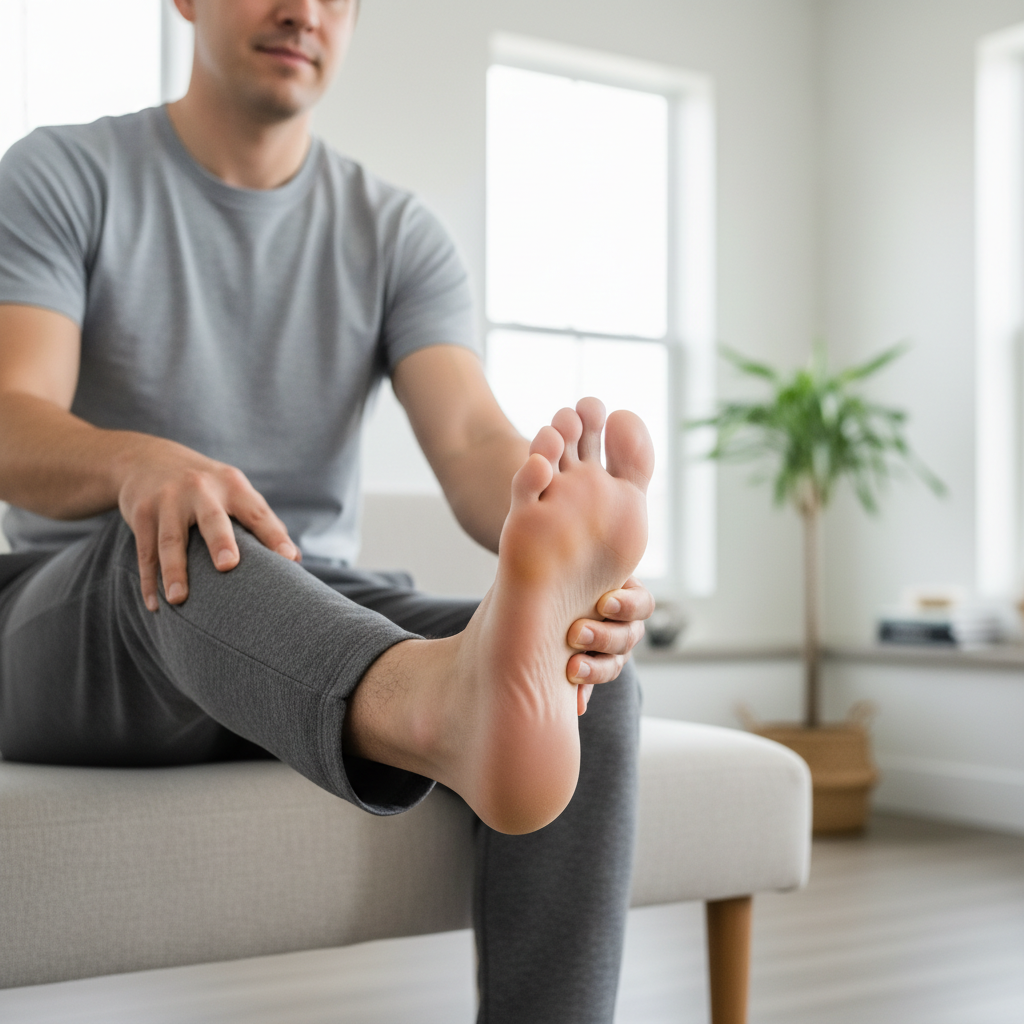
- Plantar fascia stretch: cross your ankle over the opposite knee, pull toes back until you feel the band under the arch, hold 20–30 seconds, repeat 3–5 times.
- Calf stretch with straight and bent knee: 30–45 seconds each position, 2–3 rounds.
According to the American Physical Therapy Association (APTA), conservative care for heel pain often includes stretching and load management, which aligns with what most runners need early on.
A runner’s return-to-running plan (simple, not magical)
The mistake many runners make is testing the foot with a “normal” run too soon, then interpreting the flare as failure. Think in small experiments.
Step 1: Pick a pain rule
- During the run, keep pain at 0–3/10.
- The next morning, pain should be no worse than baseline.
- If either rule breaks, reduce the next run’s volume or intensity.
Step 2: Use run-walk to control load
- Try 20–30 minutes total: 2–3 min run / 1–2 min walk, repeat.
- Stay flat, avoid hills and fast finishes.
- Add time slowly, usually 5–10 minutes per week if mornings stay calm.
Step 3: Keep fitness with low-irritation options
- Cycling, swimming, deep-water running often maintain aerobic capacity with less foot strain.
- Elliptical can work, but if you feel heel pull, back off.
Strength work that actually matters (and how to progress)
Once symptoms settle a bit, strength becomes the long-term lever. Not because you “lack willpower,” but because tissue tolerance improves when load increases are structured.
Start here: foot and calf basics (3–4x/week)
- Isometric calf raise hold: rise up, hold 20–30 seconds, 3–5 reps.
- Short-foot drill: gently lift the arch without curling toes, 6–10 reps, slow.
- Towel or band toe flexion: controlled, 2–3 sets of 8–12.
Progression when mornings are stable
- Single-leg calf raises through full range, 3 sets of 6–10.
- Slow eccentrics (3 seconds down) if tolerated.
- Loaded carries and single-leg balance to improve foot control under fatigue.
Keep the goal practical: strength that makes easy runs feel easy again, not a perfect-looking exercise routine.
Shoes, inserts, and taping: what’s worth trying (and what to avoid)
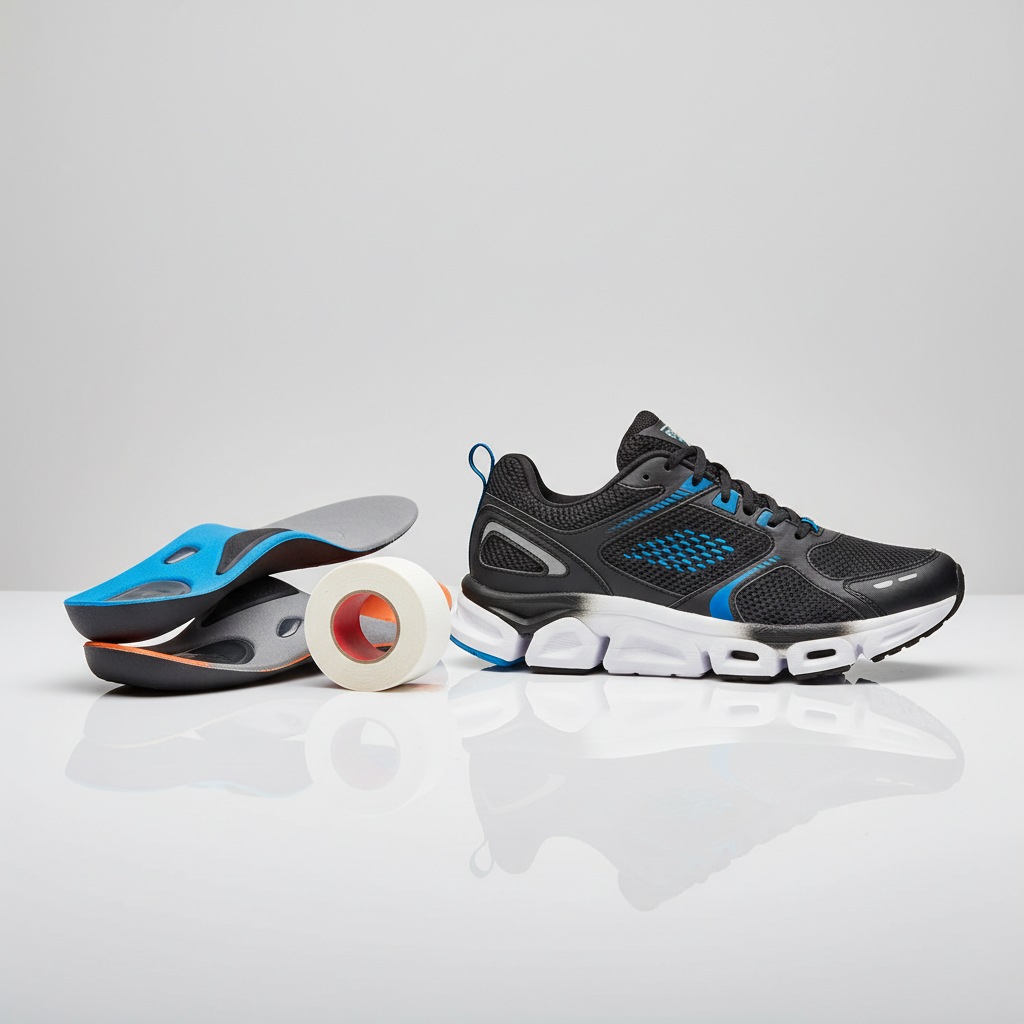
Runners often want the “right shoe” to fix everything. Reality: footwear can reduce symptoms, but it rarely replaces load management and strengthening.
Quick comparison table
| Option | When it helps | Common pitfalls |
|---|---|---|
| Supportive running shoe | Daily comfort, reduces strain on hard surfaces | Too soft can increase instability for some runners |
| Over-the-counter insole | Mild to moderate symptoms, especially for walking-heavy days | Buying the stiffest option and wearing it all day can irritate |
| Low-dye taping | Short-term support during work shifts or easy runs | Skin irritation, taping too tight, relying on it instead of rehab |
| Carbon plate “super shoe” | Sometimes reduces calf load for some runners | Can shift stress to foot in others, test cautiously |
What I’d avoid early on
- Going fully minimalist or doing barefoot “foot rehab” on hard floors while symptoms remain hot.
- Changing three variables at once: new shoes, new insert, new training block. You’ll never know what helped.
Common mistakes that keep plantar fasciitis from improving
Most setbacks come from understandable choices, you’re trying to stay fit, you’re guessing, and the heel pain sends mixed signals.
- Testing it with speed: strides, tempos, or hill sprints return too early.
- Ignoring walking load: the run might be 30 minutes, but the rest of the day can be 10,000 steps on concrete.
- Over-stretching irritated tissue: aggressive arch rolling or deep stretching that spikes pain can backfire.
- Chasing one “fix”: shockwave, massage gun, new shoes, all possible tools, but none work well if training keeps provoking symptoms.
Key point: if you change training and the morning pain decreases over 1–2 weeks, you’re usually moving in the right direction, even if it’s not linear.
When to see a professional (and what to ask for)
If symptoms drag on, getting help can save months of trial and error. Many cases respond to a physical therapist who treats runners, or a sports medicine clinician who can rule out other causes.
- If pain persists beyond 6–8 weeks despite sensible load reduction and rehab.
- If you suspect a stress injury, nerve issue, or you have diabetes or circulation concerns.
- If your job requires standing and you can’t modify activity enough on your own.
Questions worth asking: “What’s your differential diagnosis?”, “How should I modify running volume week to week?”, “Which strength milestones signal I can add speed again?”
According to the American College of Foot and Ankle Surgeons (ACFAS), persistent heel pain may need a structured evaluation and a stepwise plan, which is especially relevant when runners try multiple interventions without clear progress.
Conclusion: keep running, just stop feeding the flare
Plantar Fasciitis rarely improves because you found one perfect stretch; it usually improves because you calm it down, reload it gradually, and build foot-and-calf capacity so your training stops feeling like a weekly gamble.
- Today: reduce the biggest irritants, use supportive footwear, start gentle stretching.
- This week: add basic strength and test run-walk with a clear pain rule.
- This month: progress calf and foot strength, then reintroduce speed and hills last.
If you want, write down your current weekly mileage, the exact time your morning pain peaks, and what shoes you wear most, those three details often make the next decision obvious.
FAQ
Can I keep running with plantar fasciitis?
Often, yes, if pain stays mild and the next-morning symptoms do not worsen. Many runners do better with reduced volume, flatter routes, and run-walk blocks while strength work ramps up.
What’s the fastest way to get rid of plantar fascia pain?
There isn’t one guaranteed fast fix. Most people improve with a combination of load management, calf and foot strengthening, and targeted stretching, and the timeline varies by how long symptoms have been present.
Is rolling a frozen water bottle helpful or harmful?
It can help pain temporarily, especially after activity, but aggressive pressure can irritate sensitive tissue. If rolling increases pain during or after, scale it back and focus on calf work and supportive walking strategies.
Do I need custom orthotics for plantar fasciitis?
Some runners benefit, but many do fine with over-the-counter inserts or shoe changes. If you keep relapsing, have significant foot structure issues, or can’t tolerate walking, a professional assessment may be worthwhile.
Should I stretch my calves or my foot more?
Usually both, but dosage matters. Gentle, consistent calf stretching plus a specific plantar fascia stretch tends to be more tolerable than long, intense sessions that spike pain.
Why does it hurt most in the morning?
Many clinicians think the plantar fascia gets stiff overnight, so the first steps load it abruptly. Night splints or a short pre-steps routine, a few ankle pumps and a gentle plantar fascia stretch, can reduce that “first-step” shock.
How do I know it’s not a heel stress fracture?
Stress fractures often hurt with weight-bearing and may not ease after warming up, and there can be focal tenderness and swelling. If you have sharp pain, worsening symptoms, or pain at rest, it’s safer to get evaluated.
If you’re trying to balance training goals with a cranky heel, it may help to bring your weekly plan, shoe model, and symptom notes to a running-savvy physical therapist or sports medicine clinic, you’ll usually get a clearer progression than guessing run to run.