
Running for beginners works best when you treat it like skill-building, not a fitness test, because most early injuries come from doing “too much, too soon” with shaky pacing and recovery.
If you’ve tried to start running before, you probably recognize the pattern: a few motivated days, sore shins or knees, then a week off that quietly turns into quitting. The good news is that safe progress is usually less about grit and more about smart structure.

This guide focuses on safety, comfort, and consistency: how to pace yourself, how to reduce common aches, and how to follow a simple plan that builds confidence. You’ll also get a quick self-check, a starter schedule, and a few “do this instead” fixes that save a lot of frustration.
Before you run: a quick safety check (so you don’t start on hard mode)
Most people can begin a gentle walk-run routine, but a little screening keeps small issues from turning into a setback. According to CDC, regular physical activity supports long-term health, and a gradual approach helps many people stick with it.
- If you have chest pain, dizziness, or unexplained shortness of breath, pause and talk with a clinician before starting.
- If you have joint pain that changes your gait (limping, favoring one side), consider a physical therapist or sports medicine consult.
- If you’re returning postpartum, post-surgery, or after a long layoff, start with walking and get clearance when appropriate.
Gear matters less than people think, with one exception: shoes. Aim for a comfortable running shoe that fits your foot shape, feels stable, and leaves a thumb-width in front of the toes. If you already have a pair that feels good on long walks, that’s often “good enough” to begin.
Why beginners get hurt (and what to do instead)
When running for beginners goes sideways, it’s rarely because someone “isn’t built for running.” Usually it’s a mismatch between what tissues can handle and what the plan demands.
Common causes you can actually control
- Speed creep: you start every run too fast, heart rate spikes, form falls apart, then aches show up.
- Volume jumps: adding distance or days too quickly, especially after a “good week.”
- All hard surfaces: only running on concrete before your legs adapt.
- Skipping recovery: poor sleep, no easy days, no strength work, then your calves and shins complain.
Do this instead: keep most sessions “easy,” build time-on-feet before distance, mix surfaces when possible, and treat rest as training. According to American Council on Exercise (ACE), gradual progression and recovery practices support safer training habits for many exercisers.
Self-test: are you ready to run, or should you walk more first?
You don’t need perfection here, just an honest read. If you check most of these boxes, you’re typically ready to begin a run-walk plan.
- You can walk 30 minutes at a brisk pace without sharp pain.
- You can climb a couple flights of stairs and recover your breathing within a few minutes.
- Your current aches are mild and predictable (tightness that warms up), not sharp or worsening.
- You can commit to 3 days per week for a month.
If walking already irritates knees, shins, or feet, it may be smarter to start with shorter walks, cycling, pool running, or an evaluation to rule out issues like tendon irritation or stress reactions. That’s not being “behind,” that’s avoiding a preventable stop-start cycle.
Your safest beginner plan (4 weeks, simple, repeatable)
This plan assumes three sessions per week, with at least one rest day between. The goal is easy aerobic work and steady adaptation. Keep the run portions slow enough that you could speak in short sentences.
Key point: If you finish feeling like you could do more, that’s the plan working. Save the “prove it” run for later.
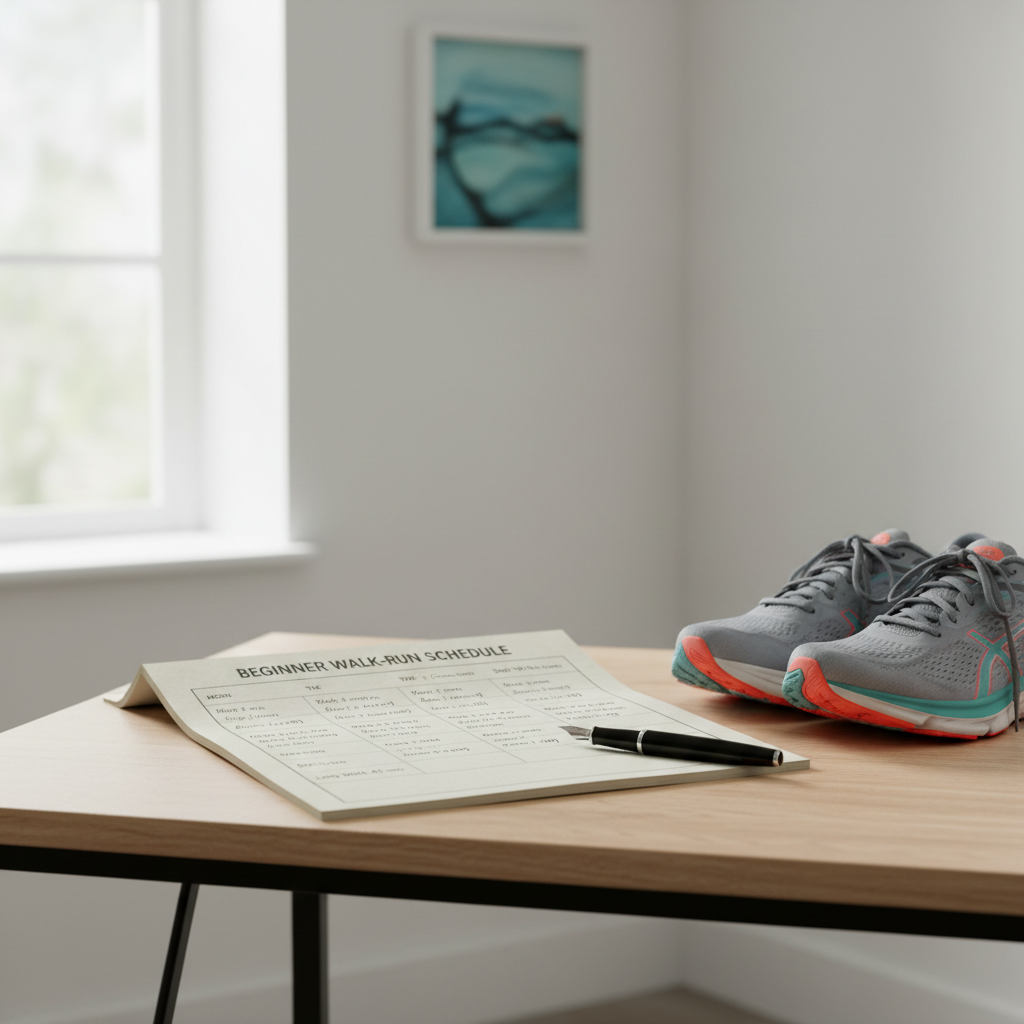
4-week walk-run schedule
| Week | Session (3x/week) | Total Time | How it should feel |
|---|---|---|---|
| 1 | Walk 5 min, then 6 rounds: run 30 sec / walk 90 sec, walk 5 min | ~23 min | Easy, breathing controlled |
| 2 | Walk 5 min, then 6 rounds: run 45 sec / walk 75 sec, walk 5 min | ~23 min | Still easy, no strain |
| 3 | Walk 5 min, then 6 rounds: run 60 sec / walk 60 sec, walk 5 min | ~23 min | Comfortably challenging |
| 4 | Walk 5 min, then 5 rounds: run 90 sec / walk 60 sec, walk 5 min | ~25 min | Steady, finish confident |
How to progress after week 4
- Option A: add one more round to your intervals, keep pace easy.
- Option B: keep rounds the same, extend the run portion by 15–30 seconds.
- Option C: add a fourth day as a brisk walk or easy bike session.
Pick one change at a time, then hold it for a week or two. That “boring” patience is what keeps running for beginners sustainable.
Easy pace, breathing, and form cues that reduce aches
You don’t need to overhaul your biomechanics, but a few cues tend to help beginners feel smoother and lighter.
Pacing: the talk test
- Easy: you can speak in short sentences without gasping.
- Too fast: you can only say a few words at a time, shoulders tense, steps feel loud.
If you’re unsure, slow down until it feels almost silly. Many new runners run every session at “medium-hard,” which is tiring but not efficient for building a base.
Form cues (simple, not fussy)
- Shorter steps often reduce shin and knee stress, especially on downhills.
- Run tall, ribs stacked over hips, avoid slouching when you get tired.
- Arms relaxed, hands soft, shoulders down; tension travels.
- Land under you, not way out in front, which can feel like “braking.”
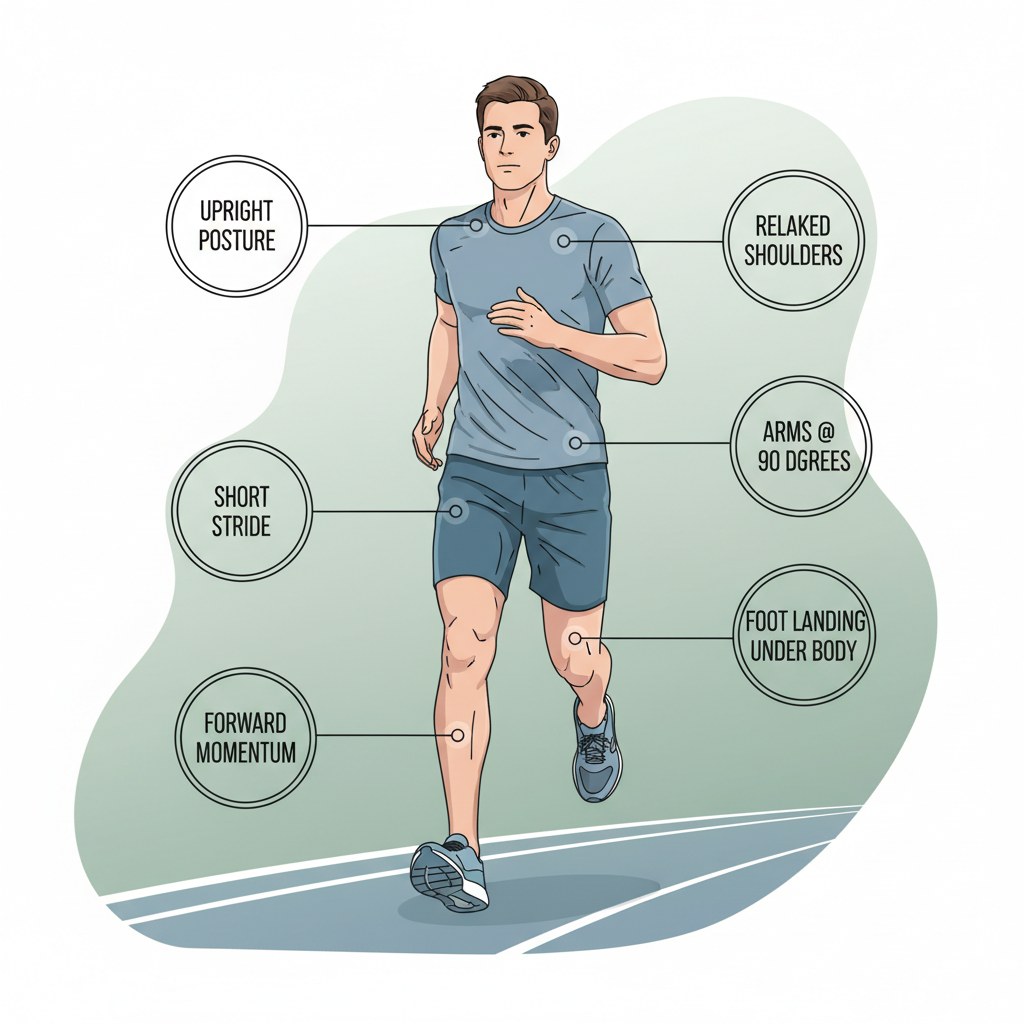
According to American Academy of Orthopaedic Surgeons (AAOS), overuse injuries can develop when activity increases faster than the body adapts, so form plus pacing plus progression usually beats any single “perfect technique.”
Warm-up, cool-down, and strength: the small habits that keep you running
Warm-ups sound optional, until you skip them and the first 8 minutes feel awful. Keep it simple and repeatable.
5–8 minute warm-up
- Brisk walk, then 10 bodyweight squats or sit-to-stands
- 10 leg swings per side (front-to-back)
- 20–30 seconds of marching with high knees, gentle effort
Cool-down
- Walk 3–5 minutes until breathing settles
- Light calf and hip flexor stretch if it feels good, no aggressive pulling
Two strength moves to start (2x/week)
- Calf raises (both legs or single-leg): 2–3 sets of 8–12
- Glute bridge or split squat: 2–3 sets of 6–10 per side
If you only do one thing beyond running, do the calf work. Calves take a beating early on, and a little capacity goes a long way.
Common beginner mistakes (and quick fixes)
- Mistake: Running every day to “build the habit.” Fix: Build the habit with walking on off-days, keep run days spaced out.
- Mistake: Turning each run into a time trial. Fix: One easy pace for a month, then add variety.
- Mistake: Ignoring nagging pain. Fix: Use the 24–48 hour rule: soreness that improves is one thing, pain that worsens needs adjustment.
- Mistake: No food or hydration plan. Fix: For short easy sessions, water is often enough; if you feel lightheaded, a small snack beforehand can help.
Also, watch the “new shoe trap.” Buying expensive shoes sometimes helps comfort, but it won’t compensate for pacing that’s too aggressive or sleep that’s too short.
When to scale back or get professional help
Discomfort is common, sharp pain is a different story. A cautious approach keeps small issues from becoming weeks off.
- Stop and seek guidance if pain is sharp, swelling appears, or you cannot run with a normal stride.
- Consider a clinician or physical therapist if pain persists beyond a week despite reducing load, or if it wakes you at night.
- Modify if you notice a consistent flare-up: shorten sessions, return to earlier intervals, swap one run for cycling, then rebuild.
If you have medical conditions or take medications that affect heart rate or balance, it’s smart to discuss your plan with a healthcare professional. It’s not overkill, it’s risk management.
Key takeaways to remember on your next run
- Keep most sessions easy, especially in month one.
- Progress one variable at a time: time, frequency, or intensity, not all three.
- Use walk breaks as a tool, not a failure.
- Strength + sleep often determine whether you stay consistent.
Starting running for beginners safely usually means choosing the slower path for a few weeks so you can keep showing up for months. If you want an action step today, schedule three run-walk sessions on your calendar, then commit to finishing each feeling like you could do a little more.
FAQ
How often should running for beginners happen each week?
Three days per week works well for many people because it gives practice without stacking fatigue. If your legs feel beat up, keep the schedule but shorten sessions rather than squeezing in extra days.
Should I run on a treadmill or outside as a beginner?
Either can work. Treadmills offer consistent conditions and softer feel for some runners, while outdoor running builds real-world coordination. Choose the option that helps you stay regular and pain-free.
What’s a good beginner running pace?
A good pace is the one that stays conversational. If you’re breathing hard early, slow down or add walk breaks, your aerobic base improves with easier effort.
Is it normal to feel shin pain when starting?
Mild tightness can happen, especially with quick volume jumps or very hard surfaces. If pain sharpens, worsens during the run, or lingers strongly the next day, back off and consider professional input.
Do I need to stretch before I run?
Many beginners do better with a brisk walk and light dynamic movements before running, then gentle stretching afterward if it feels good. Aggressive static stretching when cold can feel counterproductive for some bodies.
What should I eat before a beginner run?
For short easy sessions, you may not need much. If you run in the morning or feel low energy, a small snack like a banana or toast 30–60 minutes before can be enough, but individual tolerance varies.
How do I know if my shoes are causing problems?
If discomfort shows up quickly, feels localized (like top-of-foot pressure), or improves when you switch shoes, fit may be a factor. Still, pacing and progression usually matter more than brand, and a running store fitting can help.
When can I start doing speed workouts?
Most beginners do well building 4–8 weeks of consistent easy running first. Once you can run continuously for 20–30 minutes comfortably, adding short strides or gentle pickups can be a reasonable next step.
If you’re starting out and want a more hands-off approach, a beginner-friendly plan with built-in progressions, rest days, and form reminders can make the first month feel much less guessy, especially if you’ve stopped and restarted before.