
Workout motivation usually fades for the same reasons: the plan feels too big, the reward feels too far away, and daily life keeps interrupting. The good news is you don’t need “more willpower” as much as you need a setup that makes showing up feel obvious, even on low-energy days.
If you want to work out daily, the real question is what “daily” means for your body, schedule, and stress level. For many people, daily training works best when it includes a mix of hard sessions, easy sessions, and recovery-focused movement, not seven straight days of all-out effort.
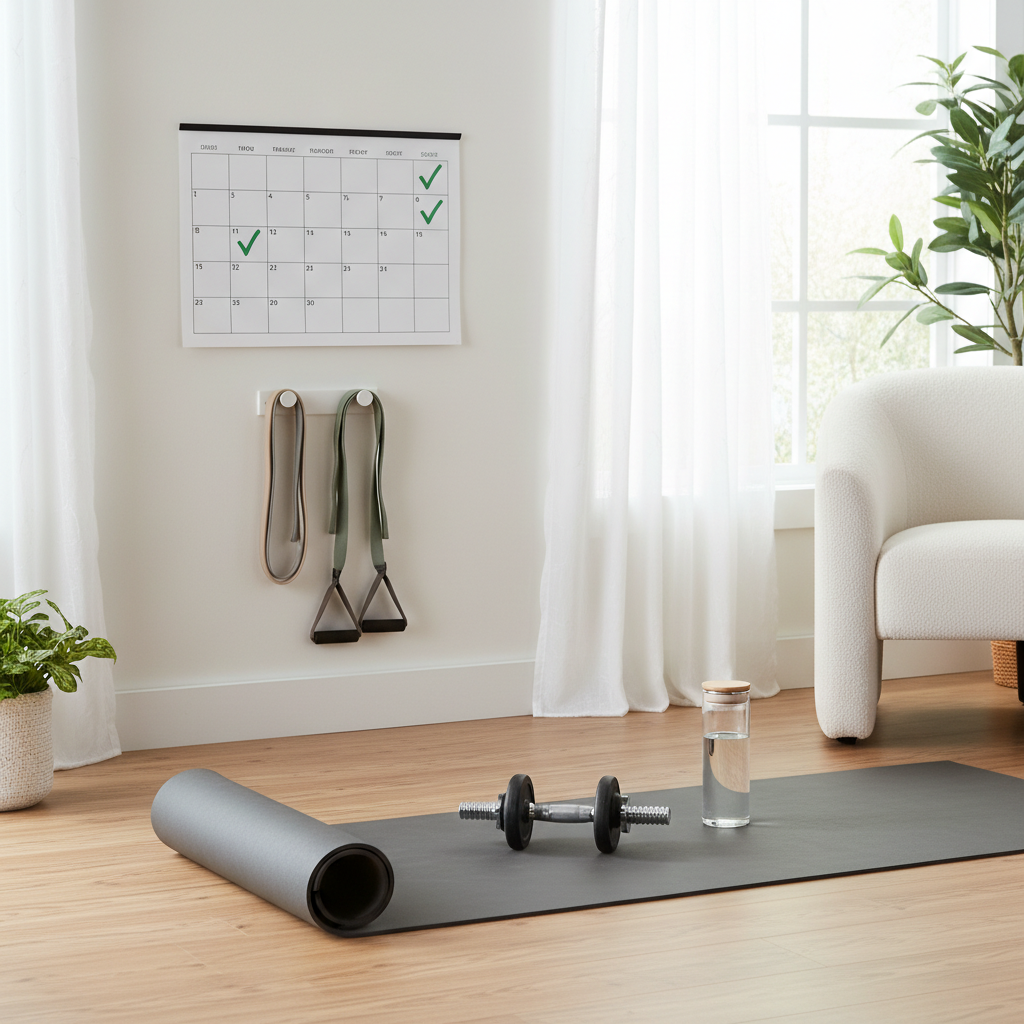
This guide breaks down why motivation drops, how to spot what’s actually happening in your routine, and what to change so consistency becomes easier. You’ll also get a simple weekly template, a quick decision table for “what to do today,” and a few reality-checks that keep people from burning out.
Why workout motivation disappears (and what that usually means)
Most people blame themselves, but motivation is often a signal that something in the system feels off. The fix tends to be structural, not emotional.
- Your workouts feel too hard too often. If every session is a test, your brain starts avoiding it. Daily training works better with variety and built-in “easy wins.”
- Your goal is vague. “Get fit” doesn’t tell you what to do on Tuesday at 6pm. A concrete target makes decisions simpler.
- You’re relying on hype. Music, pre-workout, and inspiration help, but they’re not reliable. Many people need friction removed more than they need pump-up energy.
- Progress feels invisible. Strength and body comp changes can be slow. Without tracking, it’s easy to assume nothing works.
- Life stress is eating recovery. Sleep debt, work stress, and family load can make training feel like punishment instead of relief.
According to the Centers for Disease Control and Prevention (CDC), adults benefit from regular physical activity for health and well-being, but how you structure it matters for sustainability. If you want daily movement, you’ll usually do better with a plan that respects recovery and energy, not a plan that dares you to “grind.”
Define “daily” in a way you can keep when life gets messy
Daily workouts fail most often because the definition is too strict. Try a definition that survives travel, deadlines, and low-sleep weeks.
Use a two-tier rule: Minimum + Ideal
- Minimum (non-negotiable): 10–15 minutes of movement you can do almost anywhere.
- Ideal (when you have time/energy): 30–60 minutes based on your plan.
This keeps your identity intact: you’re still “a person who works out daily,” even if today is a quick walk and mobility work.

Quick self-check: is “daily” helping or hurting?
- You feel generally better after sessions, not wrecked for days.
- Your sleep and mood stay stable most weeks.
- You can take an easy day without feeling like you “failed.”
If you’re constantly sore, dreading workouts, or stacking caffeine to get through them, daily training may still work, but the intensity distribution probably needs adjusting.
A simple daily decision table (use this when motivation is low)
On the days when workout motivation drops, decision fatigue becomes the real problem. This table gives you a “default” answer in under 30 seconds.
| How you feel today | What to do | Time | Goal |
|---|---|---|---|
| Energetic, slept well | Strength or intervals (planned hard day) | 30–60 min | Progress |
| Okay-ish, a bit stressed | Moderate full-body, steady cardio, or class | 20–45 min | Consistency |
| Tired, poor sleep, sore | Walk + mobility + light core | 10–30 min | Recovery |
| Mentally fried, zero desire | “Minimum” session only, then stop | 10–15 min | Identity |
Notice what’s missing: guilt. You’re still training daily, you’re just choosing the right dose.
Build a routine that makes motivation optional
If you depend on feeling inspired, you’ll keep restarting. If you design the environment, your habits carry you.
Make your start stupidly easy
- Keep shoes, headphones, and water in one spot.
- Pick a “start cue” you can repeat: after coffee, after work logout, after school drop-off.
- Commit to the first 5 minutes, not the full session.
Many days, once you begin, you’ll do more. But even when you don’t, you kept the streak alive without overpromising.
Use a fixed schedule, flexible content
People often try to do the opposite, they pick random times but rigid workouts. Flip it. Keep the time consistent, let the workout flex based on energy and soreness.
Track the right thing
- Beginner: track “did I show up?” and session type.
- Intermediate: track 1–2 performance markers (reps, pace, weight).
- Anyone: track sleep and stress for context, it explains a lot.
Practical ways to stay motivated without forcing it
When people ask for workout motivation, they often mean “How do I make this feel less like a fight?” These tend to work in real life.
- Lower the bar, raise the frequency. A smaller workout done often usually beats a perfect plan done rarely.
- Pair it with something you like. Only watch a show while on the bike, only listen to a podcast while walking.
- Switch the scorecard. Instead of “calories burned,” focus on mood, energy at 3pm, or back pain improving.
- Use social gravity. A friend, class, or coach can reduce negotiation with yourself.
- Keep a “good enough” list. Three fallback workouts you can do when you don’t want to think.
Three “good enough” workouts (copy/paste)
- 10-minute reset: 5-minute brisk walk + 5-minute mobility.
- 20-minute full body: squats, push-ups, rows, plank, repeat at a comfortable pace.
- 30-minute sweat: incline walk, easy jog, or cycling at conversational effort.
According to the American College of Sports Medicine (ACSM), a balanced approach that includes aerobic activity and strength training supports overall fitness; in practice, balance also protects your motivation because you’re not forcing the same hard stimulus every day.
A weekly template for daily workouts (without burning out)
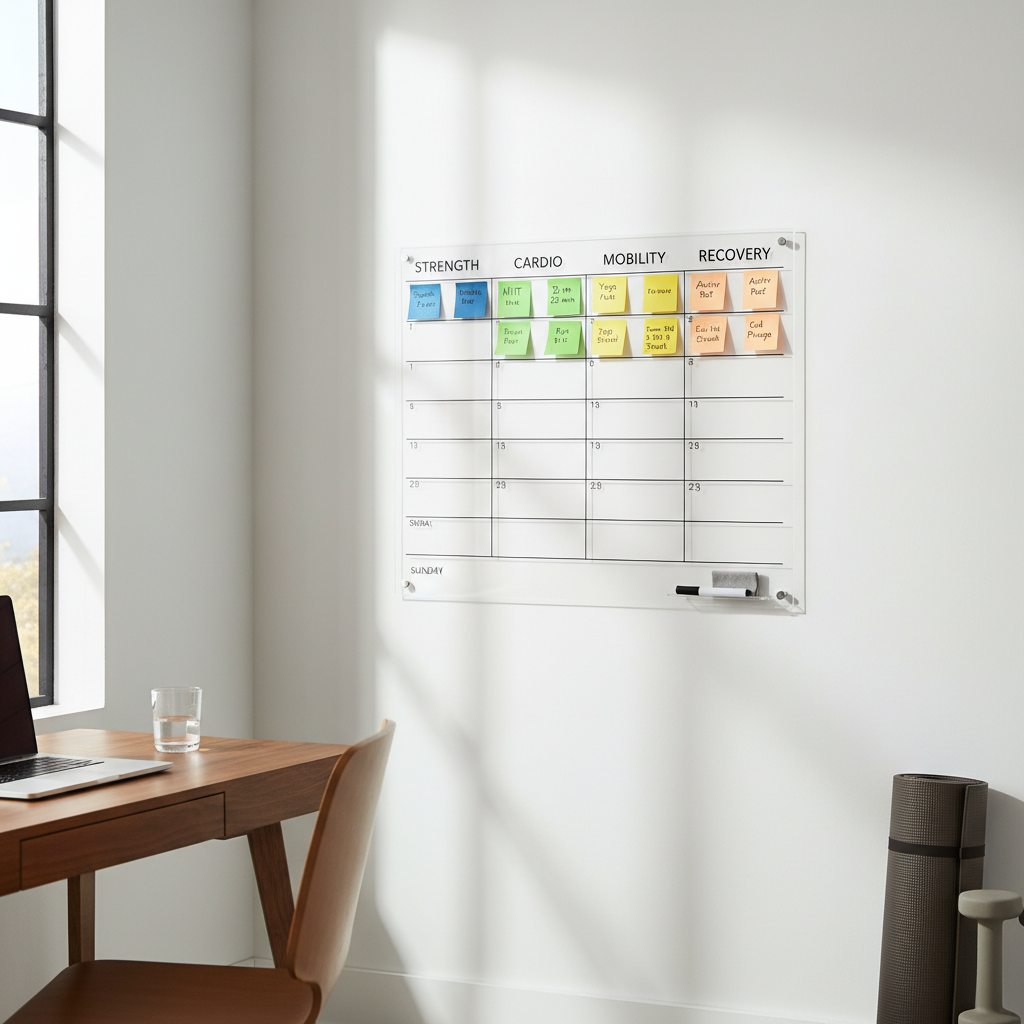
If you want daily movement, a repeating structure helps. Use this as a starting point and adjust around your body and schedule.
- Mon: Strength (lower body + core)
- Tue: Easy cardio (walk, bike, zone 2 effort)
- Wed: Strength (upper body)
- Thu: Mobility + light conditioning
- Fri: Strength (full body)
- Sat: Fun cardio (sport, hike, class)
- Sun: Recovery day (easy walk + stretching)
Two notes that save people: keep easy days truly easy, and if you’re new, fewer strength days may be smarter. Daily training can be “daily movement,” not “daily max effort.”
Common mistakes that quietly kill motivation
- All-or-nothing rules. Missing one day becomes “I ruined it,” then you disappear for two weeks.
- Copying an influencer split. Your job, sleep, age, and injury history change what you can recover from.
- Ignoring pain signals. Sharp pain, joint pain, numbness, or swelling should not be “pushed through.”
- Too many new changes at once. New program, new diet, new schedule, new supplements, it’s a lot to maintain.
- No plan for travel or busy weeks. If you don’t pre-decide your minimum, you’ll default to nothing.
According to the National Institutes of Health (NIH), physical activity supports health, but safety and appropriate progression matter. If your motivation dies every time you increase intensity, it may be your body asking for a slower ramp.
When to get professional help (and what to ask for)
If workout motivation stays low for weeks, it can be a training issue, but it can also be recovery, mental health, or pain. Getting help can save time and prevent setbacks.
- Consider a certified trainer if you feel lost, keep program-hopping, or don’t know how to progress safely.
- Consider a physical therapist if pain changes your movement, pain wakes you up, or symptoms persist.
- Consider talking with a healthcare professional if fatigue feels extreme, dizziness happens, or you have medical conditions that affect exercise.
Good questions to ask: “What should an easy day feel like for me?” “How many hard sessions can I recover from?” “What signs mean I should back off this week?”
Key takeaways (keep this simple)
- Daily workouts work best with intensity variety, not daily max effort.
- Define a minimum workout that protects your consistency on chaotic days.
- Use a decision rule so you don’t argue with yourself at workout time.
- Track showing up before you obsess over numbers.
Conclusion: make it easy to start, then earn the hard days
If you’re chasing daily consistency, don’t wait for motivation to appear. Build a routine where the default action is small, doable movement, then layer in harder training when your energy supports it. Pick your minimum for tomorrow, put it on the calendar, and make the first five minutes almost automatic.
FAQ
How do I keep workout motivation when I’m tired after work?
Plan a low-friction transition: change clothes, drink water, do a 10-minute minimum session. If energy returns, keep going; if not, stop without guilt and protect sleep.
Is it okay to work out every day, or do I need rest days?
Many people do well with daily movement, but not daily high intensity. A “rest day” can still include walking and mobility. If soreness piles up, scale intensity and consider a professional opinion.
What’s the best time of day to work out for consistency?
The best time is the one you can repeat. For some, morning reduces interruptions; for others, lunch or after work is more realistic. Pick a time window you can defend most days.
What if I miss a day and feel like I failed?
Make your rule “never miss twice.” One missed day is normal; the second is where habits start breaking. Resume with an easy session, not a punishment workout.
How long does it take to build a workout habit?
It varies a lot by schedule and stress. Most people notice it gets easier when the routine is consistent and the minimum is clear, usually over several weeks rather than a few days.
Should I use pre-workout or caffeine for motivation?
It can help some people, but it’s not a foundation. If you need stimulants every time, your plan may be too intense or recovery may be lacking. If you have health concerns, ask a healthcare professional.
How do I stay motivated if I’m not seeing physical changes?
Track performance, energy, and adherence, not just the mirror. Strength increases, better sleep, and improved stamina often show up before visible body changes.
If you’re trying to make daily workouts stick and you want a more “plug-and-play” routine, it can help to use a simple weekly template plus a short list of fallback sessions, so on the hard days you’re following a plan rather than negotiating with yourself.