
Muscle Recovery is what decides whether today’s workout makes you stronger tomorrow or just leaves you stiff, tired, and chasing aches for days. If you regularly feel sore enough to skip sessions, or you’re stuck using the same weights for weeks, recovery is often the quiet bottleneck.
This matters because your body adapts between workouts, not during them, and the gap between “productive fatigue” and “too much” is smaller than most people expect. The goal is not to eliminate soreness at all costs, it’s to bounce back with enough energy, mobility, and motivation to train again.

Below are practical, repeatable habits you can use after almost any session, plus a quick self-check so you can tell whether you need more food, more sleep, smarter programming, or simply a better post-workout routine.
What “good recovery” actually looks like (and why you might be missing it)
Most people only judge recovery by soreness, but soreness is an imperfect signal. Some workouts create minimal soreness and still demand a lot from your nervous system, while a new movement can make you sore even when the load is light.
In real training life, recovery problems usually come from a few predictable places:
- Training dose mismatch: volume or intensity climbs faster than your lifestyle can support.
- Under-fueling: not enough total calories, or missing protein and carbs when they matter.
- Sleep debt: the “I’ll catch up on the weekend” pattern that never quite catches up.
- Stress stacking: tough job weeks + poor sleep + high training load tends to show up as stalled performance.
- Too little movement between sessions: staying glued to a chair all day makes you feel more beat up.
According to the Centers for Disease Control and Prevention (CDC), most adults benefit from adequate sleep as part of overall health, and that foundation often shows up in training recovery as well.
A quick self-check: what kind of recovery issue is this?
If you’re trying to improve Muscle Recovery, start by identifying the pattern, because the fix is different depending on what’s off.
Use this checklist after 7–10 days of training
- Soreness: mild and fading within 24–72 hours, or deep soreness lingering 4+ days?
- Performance: are loads/reps stable, improving, or trending down across sessions?
- Sleep: do you wake up reasonably refreshed most days?
- Appetite and mood: unusually cranky, flat, or not hungry can be a red flag.
- Resting heart rate: if you track it, is it noticeably higher than your normal baseline?
- Joint vs muscle discomfort: sharp joint pain or pinching is not the same as muscle tenderness.
If performance drops and sleep feels shaky, the problem often isn’t a “magic recovery tool,” it’s that your total load exceeds your total capacity right now.
Your post-workout routine: the non-negotiables (simple, not fancy)
Right after training, the biggest wins come from doing a few basics consistently. Think of this as your default template.
1) A short cooldown to downshift
Five to ten minutes of easy movement can help you exit the session in a calmer state. It doesn’t need to be elaborate: light cycling, walking, or a few relaxed mobility drills usually does the job.
- 2–5 minutes easy cardio (nasal breathing if comfortable)
- 2–4 mobility moves you actually need (hips, ankles, T-spine are common)
- One gentle stretch for the tightest area, no aggressive forcing
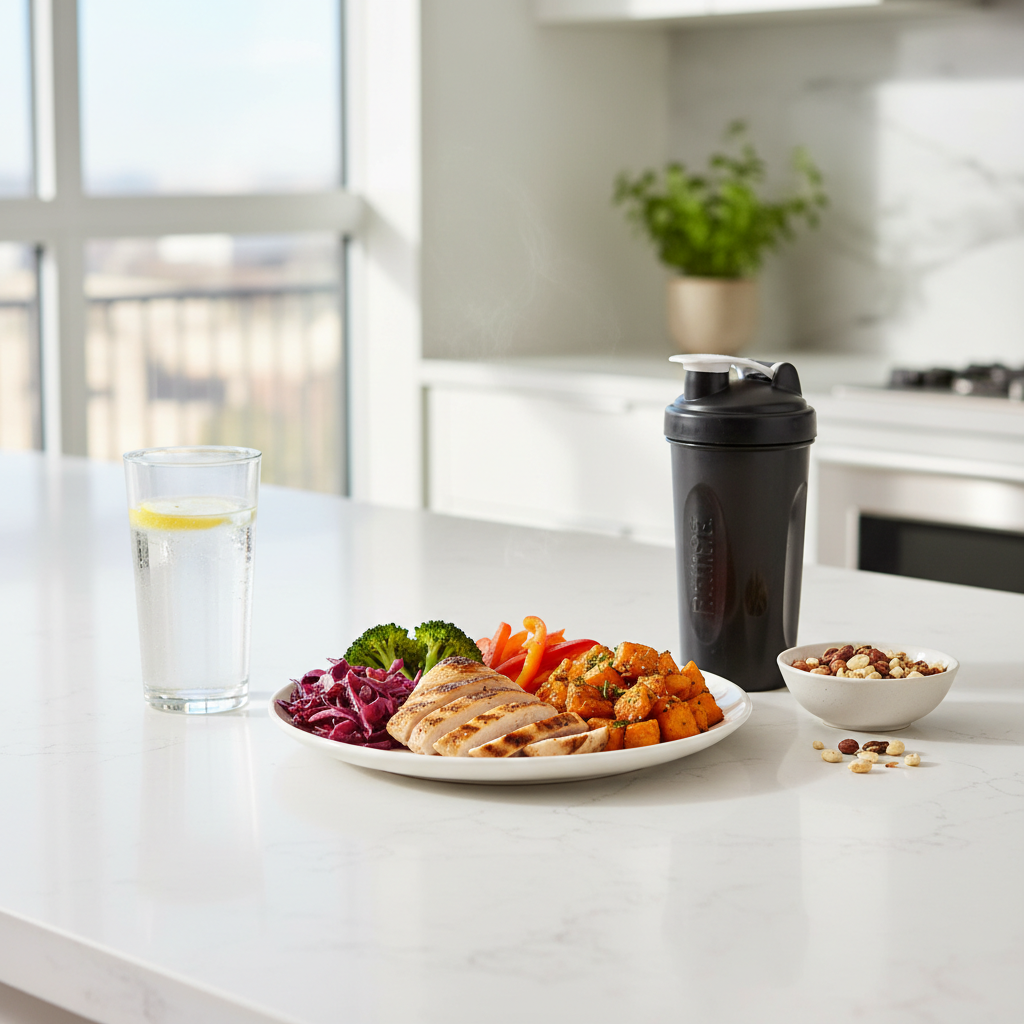
2) Protein + carbs within a reasonable window
You don’t have to sprint to a shaker bottle, but many people do better when they stop “accidentally fasting” after hard sessions. Protein supports muscle repair, carbs help replenish glycogen, which can matter a lot if you train again soon.
- Protein idea: a meal or shake that fits your digestion and schedule.
- Carb idea: rice, oats, fruit, potatoes, or bread, especially after high-volume lifting or cardio.
- Hydration: sip water consistently, and consider electrolytes if you sweat heavily.
According to the American College of Sports Medicine (ACSM), fluid replacement and adequate fueling are key parts of exercise recovery, especially for people training frequently or sweating a lot.
3) Rehydrate with a plan (not a guess)
If you finish workouts with headaches, heavy fatigue, or cramps, hydration is worth tightening up. A practical approach is to monitor urine color (pale yellow is a common target) and pay attention to large bodyweight swings across a session.
If you train in heat or do longer sessions, electrolytes may help, but if you have blood pressure or kidney concerns, it’s smart to ask a clinician what’s appropriate.
The recovery toolkit: what to use, when it’s worth it
There’s no shortage of tools marketed for Muscle Recovery. Some are helpful, some are mostly comfort. The trick is to match the tool to the problem.
Tools and typical use-cases
- Light movement (active recovery): great the day after tough lifting, helps stiffness without adding stress.
- Foam rolling: can reduce the “tight” sensation short-term, useful before or after training if it helps you move better.
- Massage: often helpful for soreness perception and relaxation, but not required for progress.
- Cold exposure: may reduce soreness feelings; if your main goal is hypertrophy, frequent intense cold right after lifting might not be ideal for everyone. Use strategically.
- Heat: can feel great for stiffness and general relaxation, especially on easier days.
Translation: if you’re sleeping 5–6 hours, no amount of rolling will “out-recover” that. Tools work best after the basics are handled.
A practical recovery plan (choose your scenario)
Different training styles create different recovery needs. Use the plan that matches your week.
If you lift heavy 3–5 days/week
- Keep a consistent post-lift meal, don’t rely on random snacks.
- Rotate intensity: not every session needs to be a grinder set.
- Add 1–2 low-intensity walks on non-lifting days, 20–40 minutes.
- Consider a deload week every so often if progress stalls and fatigue piles up.
If you do high-intensity cardio (intervals, classes) often
- Space hard sessions, back-to-back HIIT days often catch up with people.
- Prioritize carbs around sessions if energy crashes and legs feel dead.
- Keep one truly easy day each week, easy means you can talk in full sentences.
If you train twice a day (or have a physical job)
- Fuel like it’s part of training, because it is.
- Short naps may help if nights are short, but they don’t replace consistent sleep.
- Track early warning signs: persistent irritability, sleep disruption, performance drop.

Recovery cheat sheet table: what to do after different workouts
Use this as a quick “what now?” reference when you’re tired and tempted to skip the basics.
| Workout type | Best immediate focus | Same-day priority | Next-day move |
|---|---|---|---|
| Heavy strength | Cooldown + protein | Full meal with carbs, early bedtime | Easy walk + mobility |
| High-volume lifting | Carbs + hydration | Electrolytes if sweaty, avoid extra HIIT | Light cardio, gentle rolling |
| Intervals/HIIT | Breathing downshift | Carbs, fluids, calm evening routine | Zone 2 easy session or rest |
| Long endurance | Fluids + carbs | Salt/electrolytes as needed, leg elevation | Short easy movement, extra sleep |
| Mobility/yoga | Normal hydration | Regular meals | Train as planned |
Common mistakes that quietly slow recovery
These are the patterns that show up again and again, especially for people who train hard but feel “stuck.”
- Chasing soreness as proof: soreness is not a score, and constantly pursuing it can keep you under-recovered.
- Saving all calories for dinner: long gaps after training often mean you never quite catch up.
- Too much intensity, not enough easy work: easy sessions build capacity without piling on fatigue.
- Ignoring stress: work and life load count, even if your program doesn’t acknowledge them.
- Using pain as “normal”: sharp pain, joint pain, numbness, or swelling deserves a different response.
When it’s time to get professional help
If you’re doing the basics and Muscle Recovery still feels unusually poor, it might be time to loop in a professional. Not because you’re broken, but because a second set of eyes can catch issues you can’t self-diagnose.
- Symptoms last weeks, not days, or performance keeps declining
- Sleep disruption, appetite changes, or mood changes become persistent
- Recurrent strains, sharp pain, tingling, or joint instability
- You’re managing a medical condition or taking medications that affect exercise tolerance
A licensed physical therapist, sports medicine clinician, or registered dietitian can help you sort training load, movement limitations, and nutrition needs. If anything feels severe or sudden, seeking medical advice sooner is the safer call.
Key takeaways (save this)
- Recovery starts with basics: cooldown, food, fluids, and sleep beat most “hacks.”
- Match the tool to the problem: rolling and ice help comfort, but they don’t replace fueling and rest.
- Watch the trend: one sore day is normal, a pattern of decline is the signal.
- Train like a human: hard days and easy days both belong in the plan.
Conclusion: a simple plan you can run this week
If you want a clean start, keep it boring for seven days: a short cooldown after every session, a real post-workout meal, steady hydration, and a stricter sleep window. Then watch performance and soreness trend, not just one day. If you do that and still feel run down, adjust training dose or ask a professional to help you pinpoint what’s missing.
FAQ
How long should Muscle Recovery take after a workout?
Many people feel mostly back to normal within 24–72 hours, but it depends on training age, workout type, sleep, and nutrition. New movements often cause longer soreness even at lower loads.
Is it okay to work out when I’m sore?
Often yes, if soreness is mild and your movement quality is still good. If soreness changes your form, feels sharp, or concentrates around a joint, backing off or swapping to a lighter session is usually the safer choice.
Does stretching improve Muscle Recovery?
Stretching can improve how you feel and move, especially if you get stiff, but it’s not a guaranteed fix for soreness. Gentle mobility plus good sleep and fueling tends to have a bigger payoff.
What should I eat after a workout for better recovery?
A balanced meal with protein and carbs is a reliable default. If you train again soon or you did a high-volume session, carbs become more important for restoring energy.
Do I need supplements for recovery?
Not necessarily. Many people can cover most needs with food, hydration, and sleep. If you’re considering supplements due to dietary limits or heavy training, it’s reasonable to consult a registered dietitian for personalized guidance.
Can I use ice baths after lifting?
Cold exposure may reduce soreness perception for some people. If your main focus is muscle growth, using intense cold immediately after every lift may not be ideal in many cases, so it might be better saved for competition weeks or very high soreness periods.
Why am I always tired even when I “recover”?
Persistent fatigue often reflects total stress load: training plus sleep debt plus life stress, sometimes with under-eating layered in. If fatigue is ongoing or paired with other health symptoms, checking in with a clinician is a smart step.
If you’re trying to make recovery more consistent without overthinking it, a simple tracker for sleep, post-workout meals, and soreness notes can make the patterns obvious fast, and it’s usually the quickest way to decide what to change next.