
Running stamina training works best when you stop chasing random “harder” runs and start building endurance with a clear mix of easy mileage, targeted workouts, and recovery that actually sticks. If you feel like you gas out early, hit a wall at mile 3, or can’t hold pace once your heart rate climbs, you’re not alone, it usually means your aerobic base, pacing, or weekly structure needs a tweak, not a total overhaul.
Stamina is worth caring about because it’s the one thing that shows up everywhere, long runs, 5Ks, hills, even “easy” days. When stamina improves, you recover faster between efforts, your form stays cleaner late in the run, and you stop needing days to feel normal again.

This guide focuses on the stuff that tends to move the needle for real runners in the US, practical weekly structure, how to choose workouts, how to pace, and what to fix when training “feels right” but your stamina still doesn’t budge.
Why your stamina stalls (and what it usually means)
If stamina isn’t improving, it’s rarely because you “lack grit.” More often, a few common patterns keep showing up.
- Too many medium-hard runs: you’re not running easy enough to build aerobic capacity, but not hard enough to create a clear training signal, so fatigue accumulates and progress slows.
- Long run is missing or inconsistent: stamina adapts to time on feet, if the long run appears and disappears, your body never fully builds that durable base.
- Pacing is off early: going out even slightly too fast can spike heart rate and burn matches you need later, it feels fine for 10 minutes, then the back half turns ugly.
- Not enough total volume for your goal: the “right” mileage varies, but there’s usually a minimum weekly load before endurance gains feel obvious.
- Recovery is undercutting the work: poor sleep, too many hard days, or lifting that competes with run sessions can keep you in a constant tired state.
According to American Council on Exercise (ACE), aerobic fitness improves when training includes appropriate intensity and progression, with recovery built in so the body can adapt instead of just accumulate stress. That idea matters here, stamina grows during adaptation, not during the grind.
A quick self-check: what type of stamina problem do you have?
Use this to diagnose your bottleneck before you change everything at once.
- You fade late even on easy runs: likely aerobic base, pacing discipline, or overall fatigue.
- You’re fine easy, but fall apart at “comfortably hard” pace: likely lactate threshold needs work, or you’re doing threshold too hard.
- You can’t handle hills without spiking: strength (glutes/calves), hill economy, or effort control.
- Your breathing feels chaotic early: warm-up missing, starting too fast, or anxiety-driven pacing.
- You feel flat for weeks: too much intensity, not enough easy mileage, or recovery gaps.
If you’re newer to running or returning after a layoff, the answer is often boring: more easy running, done consistently, then layer workouts on top.
The stamina-building weekly structure (simple, not simplistic)
For most runners, running stamina training improves fastest with a week that has one long run, one quality session, and the rest truly easy. The exact days can shift, the pattern matters more than the calendar.
Anchor sessions that usually work:
- Long run: steady, conversational effort, gradually longer over time.
- One quality workout: threshold intervals, hills, or short reps depending on your goal.
- Easy runs: keep them easy enough that you could talk in full sentences.
- Optional recovery run or cross-training: only if it helps you feel better, not if it turns into “more work.”
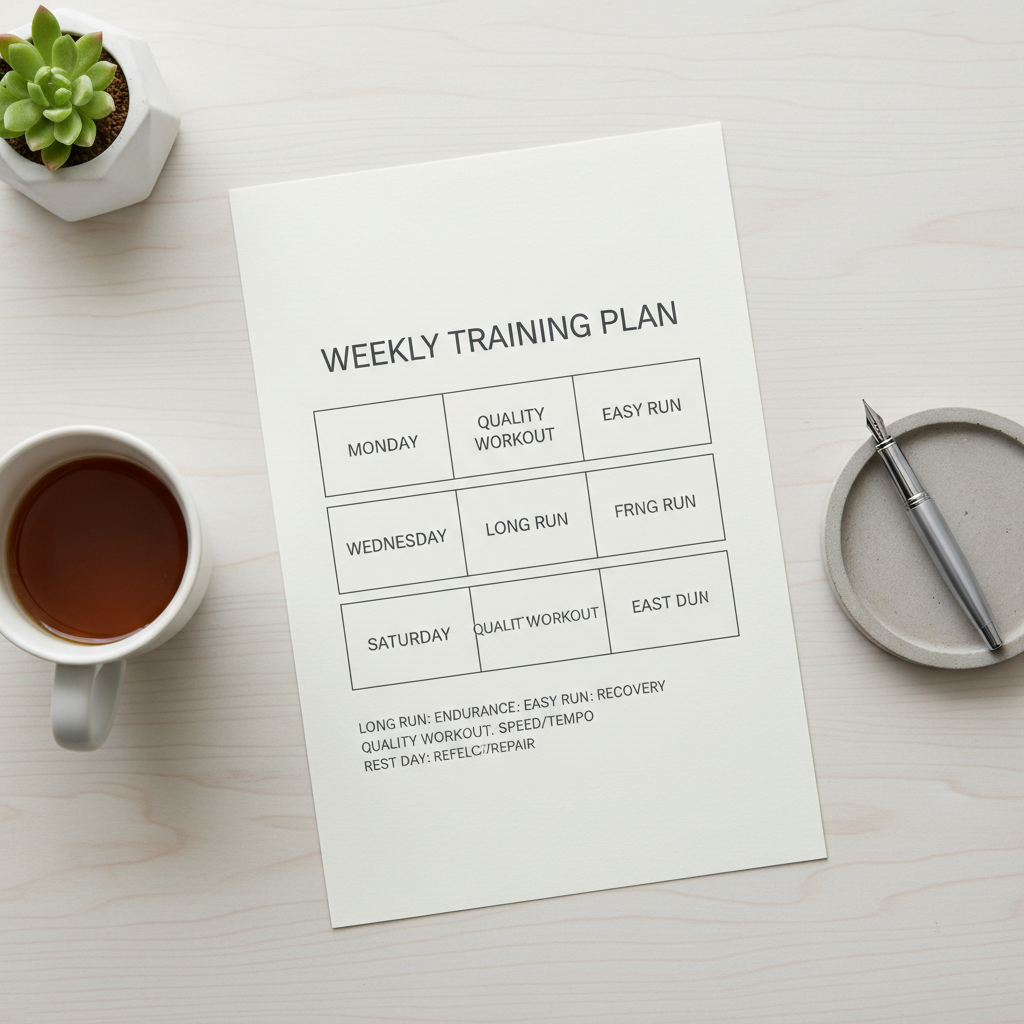
Where people get tripped up is intensity distribution. If you’re doing two or three hard-ish runs weekly plus a long run that turns into a race, you may feel busy but not get durable.
Workouts that actually build endurance (pick 1 lane at a time)
There are plenty of sessions that look impressive on paper, but a few repeatably improve stamina without wrecking the rest of your week. Rotate them in blocks of a few weeks.
1) Long run progression (strong but controlled)
Run the first 70–80% easy, then gently speed up to a steady effort you can maintain. This trains finishing strength without turning the day into a sufferfest.
- Example: 60 minutes easy + last 15 minutes steady
- Good for: half marathon base, “I always die late” problems
2) Threshold intervals (comfortably hard, not all-out)
Threshold work builds the ability to hold a faster pace with less fatigue. If you go too hard, it becomes VO2 work and you lose the point.
- Example: 3 x 8 minutes at controlled hard effort, 2 minutes easy jog between
- Good for: 10K to half marathon stamina
3) Hill repeats for strength-endurance
Short hills improve power and form, longer hills build stamina. Keep effort honest, sprinting hills often creates soreness that disrupts the week.
- Example: 8 x 45 seconds uphill at strong effort, walk/jog down recovery
- Good for: runners who struggle on rolling routes
4) Aerobic “cruise” run
One steady run where you feel in control, not chatting easily, not gasping. It’s a nice bridge between easy and threshold.
- Example: 35–50 minutes steady, relaxed focus
- Good for: building durability when intervals feel too sharp
According to Centers for Disease Control and Prevention (CDC), adults benefit from regular aerobic activity, and intensity can be progressed over time. For stamina, that progression typically looks like slightly longer long runs, slightly more total easy minutes, then carefully placed quality.
How to progress safely (so your legs adapt instead of revolt)
Progression is where stamina gains come from, but it’s also where most overuse issues start. If you’re guessing, simplify.
- Change one variable at a time: add time or add intensity, not both in the same week.
- Keep easy days easy: they’re your aerobic “volume bank,” and they protect quality days.
- Use time-on-feet if pace varies: heat, hills, and fatigue make pace a messy metric.
- Plan lighter weeks: many runners handle 2–3 build weeks, then one easier week, but your recovery needs may differ.
If you’re working with heart rate, treat it as a guardrail rather than a judge. Hydration, stress, caffeine, and sleep can all shift readings.
Practical stamina plan: choose your level
Below is a realistic starting point. Adjust days to your schedule, the spacing between hard efforts matters more than the weekday labels.
| Runner level | Weekly frequency | Key sessions | Progress focus |
|---|---|---|---|
| Beginner / returning | 3–4 runs | 1 long easy run, 2–3 easy runs | Add 5–10 minutes to long run every 1–2 weeks |
| Intermediate | 4–5 runs | 1 long run, 1 threshold or hills, 2–3 easy runs | Keep quality controlled, increase total weekly time gradually |
| Experienced | 5–6 runs | 1 long run (some progression), 1 quality workout, optional steady run | Block training: 3–5 weeks focus, then reset week |
Key takeaway: running stamina training usually improves more from consistent easy volume than from adding a second hard workout too soon.

If your main goal is to run longer without stopping, prioritize extending the long run and keeping the other runs easy enough that you finish feeling like you could do a bit more.
Fueling, hydration, and recovery (the unsexy stamina multipliers)
People love workout hacks, but stamina often improves when you stop running on empty, especially on long runs.
- Pre-run: a small carb-focused snack can help if you train early or feel low energy, tolerance varies by person.
- During longer runs: if you run long enough, taking in carbs and fluids may help maintain effort, experiment conservatively to avoid stomach issues.
- Post-run: a normal meal with carbs and protein supports recovery, timing matters less than consistency for many runners.
- Sleep: if stamina feels stuck, sleep is the first boring thing to audit, not the last.
According to American College of Sports Medicine (ACSM), hydration and fueling strategies should be individualized, and endurance performance can be affected by inadequate fluid or carbohydrate intake. If you have a medical condition or a history of disordered eating, it’s smart to consult a qualified professional.
Common mistakes that look like “hard work” but slow progress
- Turning every run into a pace test: stamina likes steadiness, not constant proving.
- Skipping warm-ups for hard days: you start too fast, breathing spikes, workout quality drops.
- Only doing speed: short intervals can help, but they won’t replace aerobic volume for endurance goals.
- Adding mileage while also adding intensity: it’s the quickest way to feel beat up and confused.
- Ignoring little pains: discomfort that changes your gait deserves attention before it becomes a layoff.
If you want a simple rule that holds up: hard days earn their place by making easy days possible, not by making every day feel hard.
When to get extra help
If you notice sharp pain, swelling, numbness, chest pain, dizziness, or symptoms that feel unusual for you, stop and consider medical evaluation. If training feels consistently draining even after you reduce intensity and improve sleep, a coach or physical therapist can help you spot issues like pacing errors, strength imbalances, or too-aggressive progression.
And if you’re managing asthma, anemia, diabetes, or heart-related conditions, it’s wise to ask a clinician how to adapt running stamina training to your situation.
Conclusion: make stamina boring, then make it strong
Better stamina rarely comes from one magic workout, it comes from stacking easy miles, protecting one quality session, and letting the long run do its quiet job week after week. Pick one change you can sustain for the next month, like slowing easy runs down or making the long run consistent, then reassess.
Action steps for this week: choose one long run you can complete comfortably, schedule one controlled workout, and make the rest of your runs truly easy so adaptation has room to happen.
FAQ
How long does it take to improve running stamina?
Many runners feel small changes in a few weeks, but the more noticeable “I can hold this effort” jump often takes 6–12 weeks of consistent training, depending on your starting point and recovery.
Should I run every day to build endurance faster?
Not necessarily. More frequency can help, but only if you can keep most runs easy and stay healthy. For plenty of people, 4–5 runs per week beats 7 tired runs.
What’s the best pace for easy runs when stamina is the goal?
A pace where you can speak in full sentences and finish feeling like you could keep going. If you’re constantly checking pace and it feels “too slow,” that’s often a sign you’re doing it right.
Do I need interval training for stamina?
Intervals can help, but you usually don’t need a lot. One quality session per week, like threshold intervals or hills, is enough for many runners when the long run and easy volume stay consistent.
Why does my stamina drop in hot or humid weather?
Heat stress raises heart rate and increases perceived effort, so the same pace feels harder. In summer, it’s common to use effort or heart rate instead of pace and accept slower runs.
Is it normal to feel tired the day after a long run?
Some fatigue is normal, especially as you build. If you’re wiped out for multiple days, the long run may be too long, too fast, or your fueling and sleep may be off.
How do I breathe better so I don’t gas out early?
A longer warm-up, slower first mile, and relaxed posture often help more than breathing tricks. If you wheeze or feel tightness, consider talking with a clinician since conditions like exercise-induced bronchoconstriction can be a factor.
If you’re trying to improve stamina but keep bouncing between “too easy to matter” and “too hard to recover,” it may help to map your week with a simple structure and objective guardrails like time-on-feet and a controlled threshold effort, it’s a lot less stressful than guessing every run.