
Muscle recovery massage gun shopping gets confusing fast because the specs sound similar, prices swing wildly, and the “best” choice depends on how you train, where you feel tight, and how sensitive your tissue feels after hard sessions.
If you only want one takeaway, it’s this, match the tool to your body and your routine, not to the loudest spec sheet. A great device feels controlled in your hand, hits the depth you actually need, and stays comfortable enough that you use it consistently.
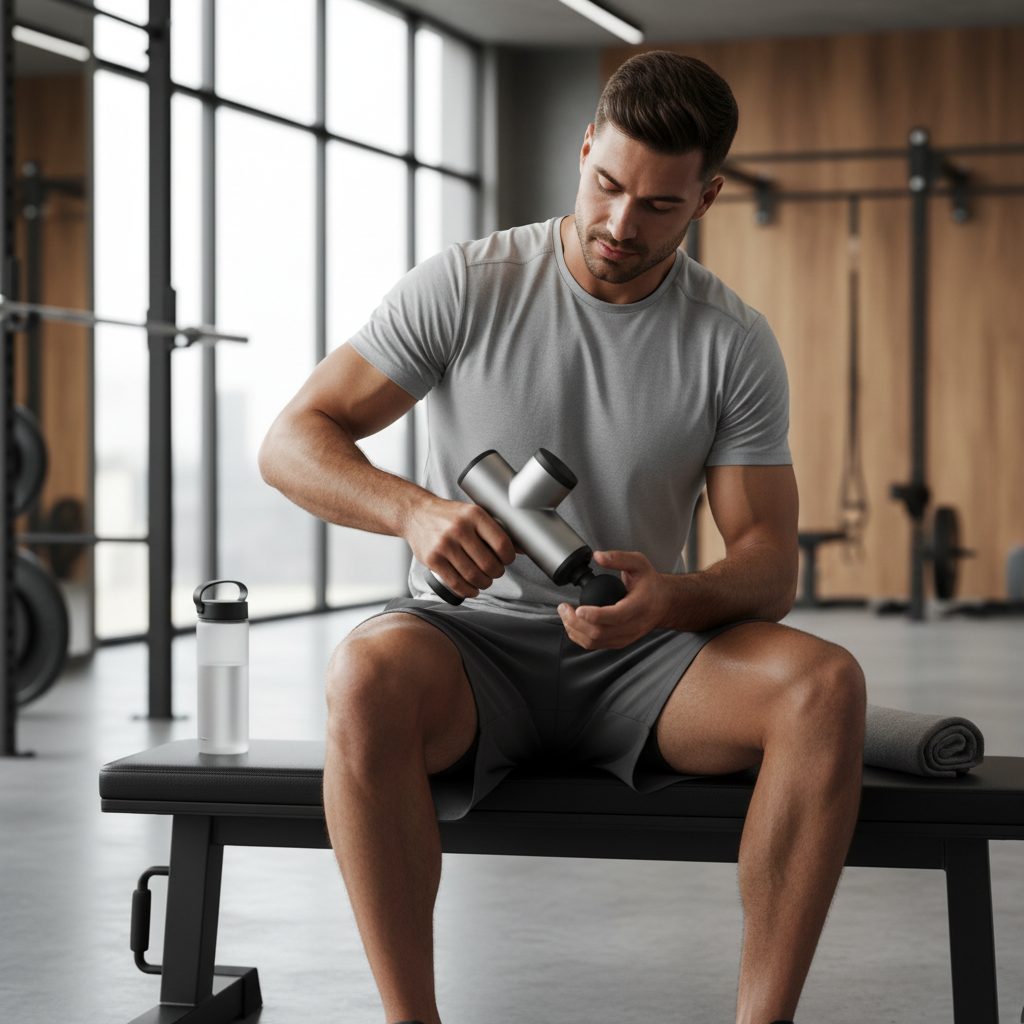
Below is a practical guide to choose a massage gun for recovery, how to spot marketing fluff, and how to use it without turning “recovery” into another source of soreness. I’ll also include quick routines, a comparison table, and the moments when it’s smarter to pause and ask a pro.
What a massage gun can (and can’t) do for recovery
A percussion device mainly helps with temporary relief, reducing the “tight” feeling, improving comfort around a joint, and making it easier to move through warm-ups. Many people also like it for downshifting after training because it feels relaxing.
But it’s not a magic repair tool, if your training load outpaces sleep, nutrition, and smart programming, no device fixes that. According to American College of Sports Medicine (ACSM), recovery is multifactorial and typically includes sleep, nutrition, and appropriately managed training stress, tools like massage fit as part of the picture, not the whole plan.
One more realistic point, soreness can come from several sources, normal delayed-onset muscle soreness, tendon irritation, nerve sensitivity, or plain overuse. A massage gun may feel great in some of these scenarios, and feel awful in others.
Key specs that actually matter (and how to read them)
Most people compare devices on speed settings alone, but recovery results usually depend more on depth, control, and comfort. Here are the specs worth caring about.
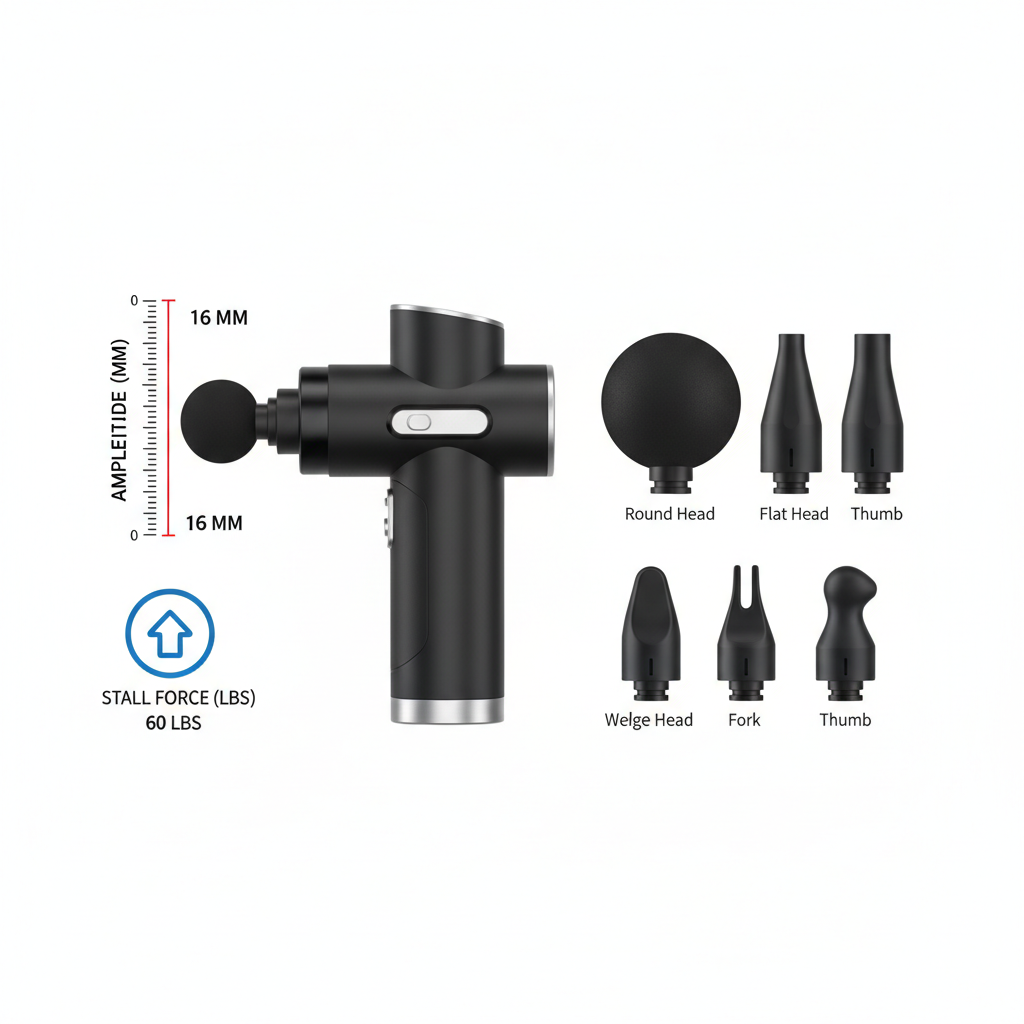
Amplitude (stroke length)
Amplitude is how far the head travels back and forth. Bigger amplitude can feel deeper, which some lifters prefer on glutes, quads, and calves. For sensitive users, smaller amplitude often feels easier to tolerate and still works well for warm-up.
Stall force (how easily it stops)
Stall force describes how much pressure the motor can handle before slowing or stopping. If you tend to lean in, a weak motor can bog down and feel “buzzy” instead of percussive. If you’re gentle and prefer light pressure, you don’t need to chase the highest number.
Frequency range and speed control
Look for speed steps you can actually use. Many people live on the low to mid range for recovery, then bump higher briefly for warm-up. A simple slider or well-spaced settings often beats 20 micro-steps that feel identical.
Ergonomics, noise, and battery
- Handle angle: If you can’t reach your upper back or glute med without wrist strain, you’ll stop using it.
- Noise: Quieter devices get used more, especially in apartments or shared spaces.
- Battery honesty: Real-world runtime drops at higher speeds and with firm pressure, that’s normal.
Quick comparison table: which type fits your recovery style?
This table won’t pick a brand for you, but it will help you choose the right “class” of device, which is where most purchase regret starts.
| Need / Scenario | What to prioritize | What to avoid |
|---|---|---|
| General gym recovery, moderate soreness | Comfortable grip, mid amplitude, quiet motor | Overly heavy units you won’t grab |
| Heavy strength training, dense legs/glutes | Higher amplitude, strong motor that won’t stall | Cheap motors that bog down under pressure |
| Runner with calves/feet tension | Precision attachments, lighter weight, good low speed | Aggressive high speeds on sensitive areas |
| Desk posture tightness (upper traps/pecs) | Easy reach angles, softer heads, low-to-mid settings | Jamming into the neck or bony areas |
| Travel and quick warm-ups | Compact size, USB-C or easy charging, case | Bulky units with awkward chargers |
A simple self-check before you buy
If you answer these honestly, you’ll narrow the field quickly and land on a muscle recovery massage gun you’ll use instead of one that sits in a closet.
- Where do you feel tight most often? Big muscles like quads and glutes usually tolerate more depth than forearms or upper traps.
- Do you prefer light pressure or do you lean in? Leaners benefit from stronger motors, light-pressure users benefit from comfort and quiet.
- Can you reach the spots you care about? If you can’t self-treat your back, consider an angled handle design or plan on partner-assisted use.
- Do you bruise easily or have sensitive tissue? Go gentler, you’ll still get benefits from short, consistent sessions.
- What makes you skip recovery work? Weight, noise, setup hassle, or “it hurts” are all solvable if you choose accordingly.
How to use a massage gun for recovery (step-by-step)
The biggest mistake is treating percussive therapy like deep tissue massage. Recovery use should feel like “pleasant pressure,” not a test of toughness. According to National Academy of Sports Medicine (NASM), self-myofascial strategies are generally used to improve short-term range of motion and reduce perceived tightness, which fits well with a controlled, moderate approach.
Post-workout routine (6–10 minutes)
- Pick 2–4 areas that worked hardest, quads, glutes, calves, lats.
- Start low and stay on the muscle belly, not on joints or bone.
- Slow passes for 30–60 seconds per area, then pause on a tender spot for 10–20 seconds if it feels tolerable.
- Stop early if you feel sharp pain, tingling, or numbness.
Pre-workout warm-up (2–5 minutes)
- Short and specific, 15–30 seconds per muscle group you’re about to train.
- Moderate speed, avoid max settings that make you tense up.
- Pair it with movement, use it, then do bodyweight reps or dynamic drills right away.
Common mistakes that make recovery worse
Most “massage gun didn’t work” stories come from a few predictable errors. Fix these and the same device often feels dramatically better.
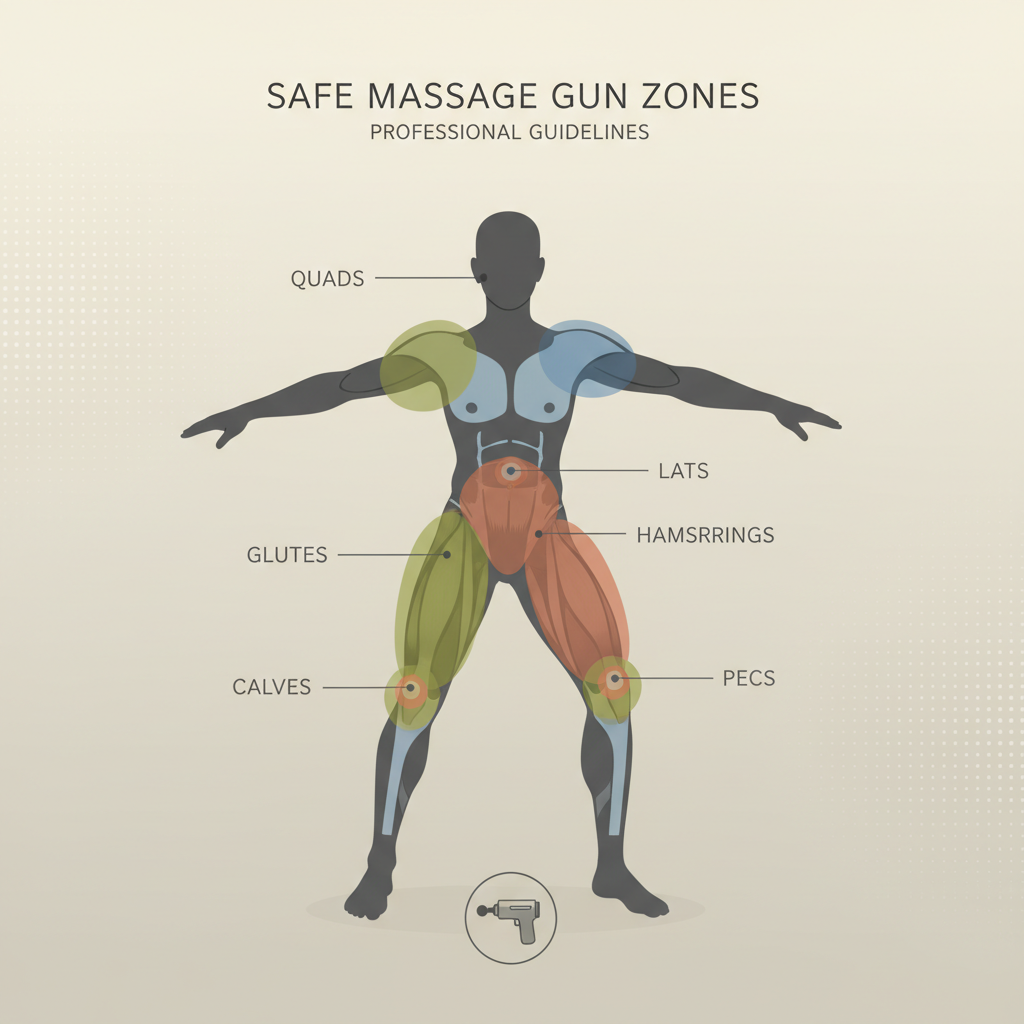
- Hitting the neck or spine: Stay on muscle, avoid front/side of the neck, spine, and bony landmarks.
- Going too hard, too long: More pressure is not always more relief, overtreating can leave you more tender the next day.
- Using high speed to chase intensity: High speed can feel chaotic on sensitive tissue, lower settings often feel more controlled.
- Skipping hydration, sleep, and load management: A device can’t compensate for chronic under-recovery.
- Using the wrong attachment: Hard bullet tips can be useful for specific small targets, but many people overuse them and get sore.
When to pause and ask a professional
If you have a new injury, unexplained swelling, significant bruising, severe pain, or symptoms like numbness, burning, or weakness, it’s smarter to stop and consult a qualified clinician. That may be a physical therapist, sports medicine provider, or another licensed professional depending on your situation.
Also consider guidance if you’re dealing with a medical condition affecting circulation or sensation, or if you take medications that increase bruising risk, in many cases you can still use recovery tools, but you want individualized safety advice.
Key takeaways and a realistic “best” recommendation
The “best” device is the one that fits your hand, matches your tolerance, and supports a repeatable routine. For most people, a mid-to-high quality muscle recovery massage gun with solid amplitude, a motor that won’t stall under moderate pressure, and 3–5 useful attachments covers daily recovery without feeling like overkill.
- If you lift heavy: favor amplitude and motor strength, then choose the quietest model you can afford.
- If you’re sensitive or new: prioritize comfort, lower noise, and soft heads, use shorter sessions more often.
- If you travel: choose compact size and easy charging, because convenience is compliance.
If you want a simple next step, pick one routine above and run it for two weeks, track how your warm-up feels and whether soreness feels more manageable, then adjust settings and attachments based on comfort.
FAQ
What is the best muscle recovery massage gun setting for soreness?
Usually low to mid speed with light-to-moderate pressure works best for soreness, because it stays comfortable and reduces the urge to “fight through” pain. If you tense up, back off.
How long should I use a massage gun on one muscle?
Many people do 30–60 seconds per area, then move on. If you want to linger on a tender point, keep it brief, and stop if the sensation turns sharp or hot.
Can a massage gun replace stretching or foam rolling?
It can replace some of your time, but it usually works best as a complement. A common combo is brief percussion work, then a few movement-based drills that use the new range comfortably.
Is a higher amplitude always better for recovery?
Not always. Higher amplitude can feel great on large muscles, but it can be too intense on smaller or sensitive areas. Comfort matters because consistency drives results.
Should I use a massage gun every day?
Daily use is common and often fine if sessions stay short and comfortable. If you notice increasing tenderness or bruising, treat that as feedback to reduce pressure or frequency.
Can I use a massage gun on my lower back?
Many people use it on the surrounding muscles like glutes and the thick muscles next to the spine, while avoiding bony areas. If you have back pain with nerve symptoms, getting clinical guidance is a safer move.
What attachments are most useful for general recovery?
A soft ball or dampener works well for most areas, a flat head is a good all-around option, and a fork can help around the Achilles region without pressing directly on it. The “bullet” tip is easy to overdo, so use it sparingly.
If you’re trying to choose a Muscle Recovery massage gun and want a faster shortlist, start by listing your top two tight areas, your pressure preference, and whether you need a travel-friendly option, that small bit of clarity usually makes the buying decision much easier.